Saturday, May 10, 2008

In search of a meaningful way of life...


Earth Rising, Heaven Descending’ is the name given by Order Member Suryaprabha to his latest series of five films charting the evolution of the FWBO – and, more generally, of Sangha in the West - over the past 40 years. His ‘Lights in the Sky’ imprint has already given the FWBO some of its evocative images of its’ past, especially through the much-loved ‘History series - or click here for some trailers.

Suryaprabha sees his films as a “search for a meaningful way of life” and, on the eve of the release of the third in the series, he has sent FWBO News this summary of what he's trying to do in the present series. He says –

“THE IDEA was to collect stories from around the world of people who have some connection to the Friends of the Western Buddhist Order and, with some reflection, to come to appreciate this hard to describe ‘spirit’. A five part series has evolved, with Part 5 becoming that original film with four preceding films setting the scene. So the series, after a statement of the ideals and principles goes, in the middle films, fairly deeply into messy worldly existence and (it is predicted) end calmly and contemplatively. People were chosen for variety of lifestyle and environment and only secondarily for their level of ‘practice’. In parts 2 to 4 the social context of their lives is explored, including the balance between personal and public concerns. In the words of Vishvapani, the series maintains a ‘sideways look’ by ‘sitting in’ on conversations rather than employing an ‘authoritarian’ narrator-interviewer approach.

"Part 1 BACKGROUND (42 mins, August ’08 release) recalls an earlier era of the Buddhist transmission to the West when FWBO founder Sangharakshita was befriended and taught in Kalimpong by Indian and Tibetan Buddhist teachers.

Now, three of his disciples undertake a pilgrimage to the Himalayas to connect with their and his spiritual roots.


"Part 2 ONCE FREE (63 mins, now released) is an ironic, tender portrait set in a place (USA) where the ratio of personal persona to public persona is perhaps 9:1. And in a place where bounty or impoverishment are seen as just rewards for an individual’s effort, a handful of Buddhists find ways of ameliorating institutional harshness through work in health, education and prisons: an example of quiet, hopeful lives within a dominant culture.

"Part 3 RECURRING DREAM (64 mins) Set in India, where the ratio of personal persona to public concern is perhaps 1:9. The iconic Dr Ambedkar ensured the Constitution outlawed caste-based discrimination and dreamt of further changes coming through the adoption of Buddhism. 50 years after he and millions of his caste-based followers converted, Hindus still see ‘Old Untouchables’ rather than ‘New Buddhists’. Why? The gains in social welfare and self confidence are indisputable. But prejudice and distrust flare up easily on all sides, amongst even Buddhists. And caste-based marriage, Subhuti argues, ensures the scope of the Dhamma Revolution remains limited. Amongst the many stories, dreams come true at one inter-caste wedding. (June 08 release)

"Part 4 UNTITLED - Set in the middle ground, in societies with a social contract. Here the FWBO is involved in many aspects of mundane life involving a range of folk. But how well can it combine going ‘outwards’ to work with culture / environment / society with the ‘inner’ work on the self? Is it easier or harder to reconcile these given that a cushy life may be spiritually impoverished one?? Stories are set in UK, Finland, Australia, New Zealand, Spain, Catalonia, Ukraine, Germany and France – many filmed in the speakers’ native languages. (Dec. 08 release)

"Part 5 UNTITLED - an open-minded focus, which hopes to capture that elusive quality of 'spiritual communication'. It's not yet been made; watch this space…"

Any of the above, including the original ‘History’ movies, are available from Suryaprabha’s shop in DVD format.


Labels: , , , ,

Monday, April 28, 2008

Fundraising successes and job opportunties at Karuna

It’s nearly the end of April and 2008 is soon to be 1/3rd gone - and over at the Karuna Trust they’ve been counting their pennies.

Karuna is the FWBO’s most successful fundraising charity: it raises over UK £1.5 million every year for a wide range of Dhamma and social projects in India and elsewhere in South Asia – both inside and outside the FWBO and TBMSG. And they have good news to report – Ādarsha, their Trust fundraiser, tells FWBO News -

“Karuna has raised over £118,000 to date this year from Trusts and Foundations. This money is for a number of specific projects working to tackle caste discrimination, enable women's empowerment and provide educational access for disadvantaged children.

“We were going ask FWBO News to run this story when we crossed the £100,000 mark – then the most recent donation, of £13,000, came in. This is for our women's empowerment project tackling incidents of caste-based violence in a particularly poor region of rural Maharashtra. It’s run by our partner SPMM who do great work with Dalits and Tribal people in India, helping them combat atrocities and discrimination through accessing legal provisions and protecting their statutory entitlements to education and legal protection. You can read some of the latest – and quite shocking - news from this project on Global Giving , an American internet fundraising site that Karuna use. And click here for a fuller list of Karuna’s Global Giving projects.

“This money is of course in addition to the regular donations from Karuna’s network of more than 5,000 donors from all over the UK”.

Karuna Job opportunities
Karuna has grown substantially in recent years, and the Karuna team in London have a number of job opportunities coming up. Check our sister site FWBO Jobs for the details: they represent a great opportunity to get involved if you want to give real practical help to the ‘Dhamma Revolution’ in India.

Labels: , , , ,

Tuesday, April 22, 2008

Dalit art in Delhi

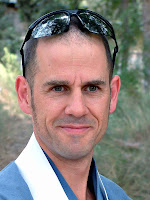
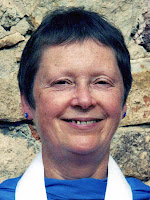
Maitriveer Nagarjun (shown left) is an Indian Order Member, studying at the prestigious JNU university in Delhi. Besides leading Dhamma classes at the university and travelling all over northern India to visit Buddhist local groups, he’s recently been helping organise ‘Eyes Re-Cast’ – possibly the first ever exhibition of contemporary art based on the philosophy of Dr. Ambedkar and the Buddha.

The painter, Savi Sawarkar, is India’s most eminent Dalit painter and print-maker. His art is angry, outspoken, and direct - causing Gary Tartakov, a professor at JNU, to comment "He doesn't sell real well [in India]. He sells internationally".

As if to bear this out, a simple Google search reveals an exhibition review from the Iowa State Daily in far-away America. They quote Eleanor Zelliott, a sympathetic academic who has for many years specialised in Dalit studies, and author of ‘Untouchable Saints: An Indian Phenomenon’. She comments "His art work targets Brahman orthodoxy. One painting which I find very touching is one of an untouchable carrying a dead cow across his shoulders, a comment on the traditional duty of the untouchable to carry carcasses from the village."

One painting that demonstrates Sawarkar's willingness to provoke is his interpretation of Manu, the great law-giver of India. Sawarkar portrays him as a monster because it was Manu who gave the laws that included the caste system that made Savarkar a Dalit. These laws made crimes against an untouchable insignificant, but crimes against Brahmans, the highest class, to be the worst thing a person could do. The Brahman view of Manu, by contrast, portrays him as prestigious and god-like.

You can see a small slideshow of Sawarkar’s paintings on FWBO Photos here – or see below. And if you happen to be in Delhi, go visit the Lalit Kala Academy Gallery, where the exhibition runs up to 30th April.

Labels: , ,

Thursday, April 17, 2008

Wheels Turning in Sarnath

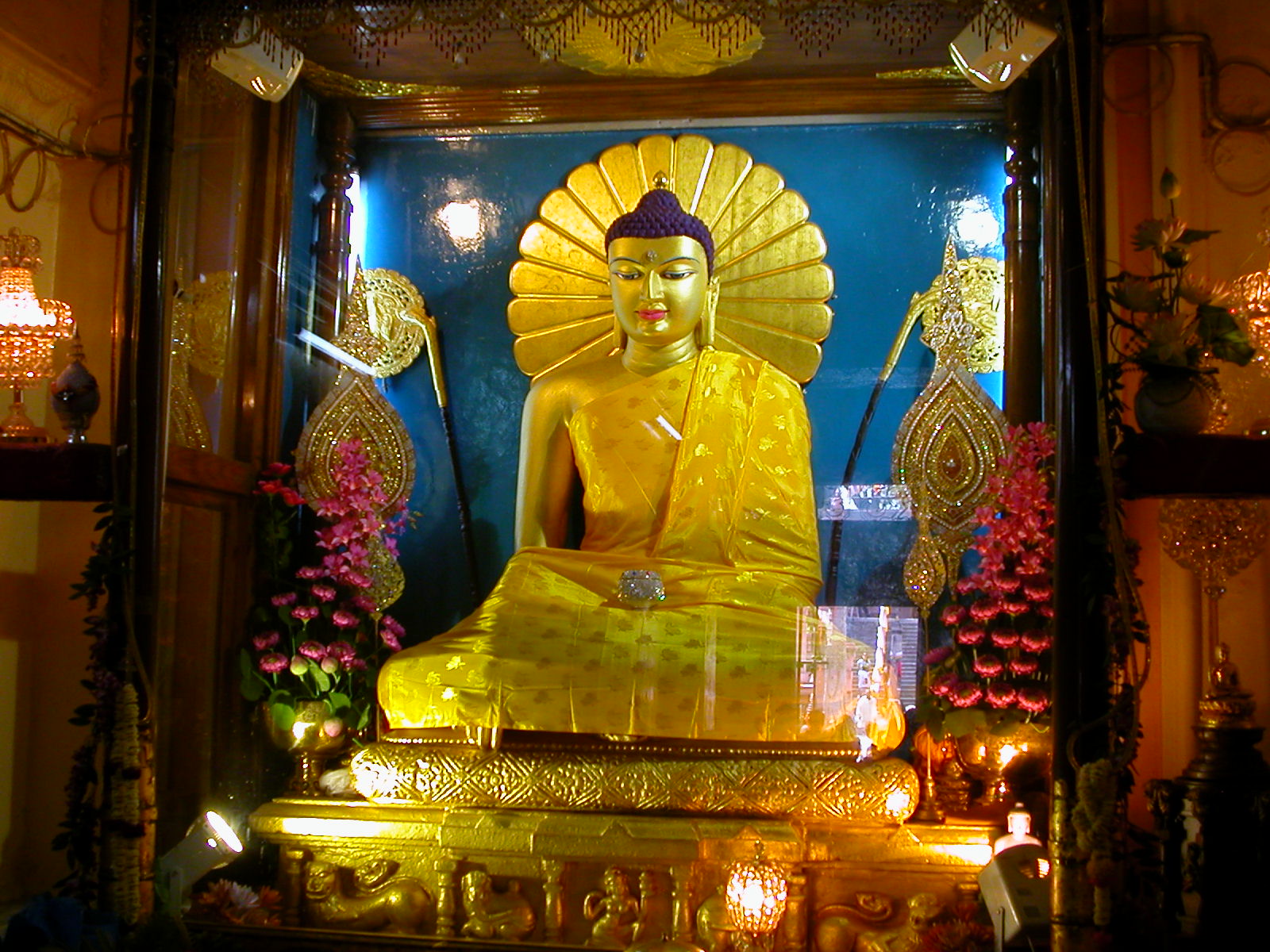
Each of the pilgrimage places associated with the life of the Buddha has its own atmosphere. Bodh Gaya, where the Buddha gained enlightenment, is a vibrant focus for practice and devotion for Buddhists from around the world; Vultures Peak, the site of many important discourses, remains a remote and beautiful spot; and Sarnath, where he first shared his teaching, has an atmosphere of quiet concentration. Several ancient stupas mark the spots where his former disciples first saw him approaching; where he gave his first discourse; and where he later taught others who had come from the nearby Hindu holy city of Varanasi.

Across the road from the main site and set back a little is land belonging to the FWBO/TBMSG. To date, only a small building has been erected on here, but it hasn’t been unused and plans are afoot to create an international study centre. There’s another, separately administered, plot of land in Bodh Gaya.

On February 3rd Vishvapani gave a talk on the land on ‘The Unity of Buddhism’, which was attended by around fifty people. Most were dalit followers of Dr Ambedkar, tens of thousand of whom became Buddhists in the 1960s. However, there has been little follow-up in the following years, despite the presence of many Buddhist teachers in Sarnath. Two years ago Dhammachari Shantighosha moved from Pune (in the TBMSG heartland, many miles to the south) to look after the land and work with local Buddhists. The people attending Vishvapani’s talk had gathered as a result of Shantighosha’s work, and over the next three days Vishvapani and Kamalagita led a retreat for ten local dhamma-mitras.

Vishvapani reports: ‘I was very impressed by their appreciation of Shantighosha and by their enthusiasm for he Dharma. Asit, one of the mitras on the retreat, collects scrap metal, and whenever he visits a locality he gathers people around and he tells them whatever he has just learned about Dr Ambedkar and Buddhism.’

The retreat came at the end of a pilgrimage in which Vishvapani, Kamalagita, Vidyadaka and Phil Daley were taken around the Buddhist holy places by Manidhamma and his wife, Samantha. Manidhamma has recently returned to India after six years study and training in the UK, and the pilgrimage benefited from his deep knowledge of the Buddha’s life and considerable experience of pilgrimages. He plans to lead many more in the coming years.

Manidhamma is working with Manidhamma is working with the Dhammaloka Trust, which intends to develop the Sarnath study centre. Their ambitious plans include a pilgrim’s guest house, a shrine room and an library and study centre that will host courses and retreats for people around the world. He also hopes to develop contacts between Sarnath’s cosmopolitan Buddhist community and the local Ambedkarite Buddhists.

The project has Sangharakshita’s blessing, but it will depend on donations from outside India. If you would like to learn more about the project or help support it, contact The Dhammaloka Trust.

Text by Vishvapani

Labels: , ,

New Indian websites from TBMSG

According to a recent estimate, FWBO and TBMSG centres and individuals worldwide are responsible for nearly 350 different websites. Amazing – but that total is only going to grow. Despite that, TBMSG, the Indian ‘wing’ of our movement, who run a multiplicity of Dhamma and social projects all across India, have been relatively invisible in cyber-space. That is changing with three recent launches of Indian-designed and operated TBMSG websites. All three are for projects currently being funded by the FWBO's Karuna Trust in the UK, but all are looking to develop their international presence and open up other funding relationships: these websites should play a significant role in that.

BH Amaravati, at www.bahujanhitaya.org is perhaps the smallest project of the three, but with (dare we say it) the smartest website. They are a dynamic team based in Amaravati, a town some 150km west of Nagpur in the central Maharastra. Besides their Dhamma activities, they operate a hostel enabling boys from poor rural families to access proper education; 'Sukhavati’, their Women and Children's Empowerment programme, a slum Education Development Project, and the Dr. Babasaheb Ambedkar Youth and Social Center.

The parent trust, BH Trust, based in Pune, has also launched its own website, www.bhtrust.org, where they describe the many social programs they are responsible for - hostels for children, a Child Development Centre, after-school classes and libraries, HIV/AIDS awareness programs, a de-addiction centre, community, sports & cultural activities, and more recently, work with Tribal people who are in many ways even more disenfranchised than the ‘Scheduled Castes’ who make up the bulk of India’s Buddhists. The site contains introductions to their work, an extensive photo library, and – most importantly – details on how to make donations directly to them via Paypal.

Lastly, the Aryatara Mahila Trust, a TBMSG women’s project, also based in Pune, have a new and very beautiful website at www.indiansisters.org. If the difficulties of reviving Buddhism in India are great, those faced by Indian women are even greater. As they say, “Because of poverty and very challenging past conditioning which reinforced feelings of inferiority, many women who have converted to Buddhism face personal and social difficulties - lack of confidence, low self-esteem, inability to take initiative. Through the Arya Tara Mahila Trust, we are building on 25 years of experience of humanitarian work to alleviate poverty in the social, medical, educational and economic fields for women and their families. Also, currently, nearly 50 women members of our orde, along with several hundred other actively involved women, are engaged in teaching and supporting meditation and Buddhist study in many parts of India”.

They’re asking for financial support; they say “To help us to support a child in a hostel for one month costs 800 Indian Rupees (US$18); a three-month course in basic computer skills for a woman or child from the slums costs 1400 Indian Rs (US$32); and the monthly payment of one health worker costs 5000 Indian Rs (US$112)”. Contact them on atmt@vsnl.net if you’d like to get involved.

You can find a map of all TBMSG groups in India (and there are many!) on the FWBO Photos website here

Labels: ,

Monday, April 07, 2008

A MILESTONE - 1500 ORDER MEMBERS

Fittingly, on the 40th anniversary of the founding of the Western Buddhist Order, 7th April 2008, news has just reached us of the ordinations of thirty-two men in India. These were held on 30th March at TBMSG’s Bhaja Retreat Centre outside Pune, but have only just been announced.

They have brought the total number of Order Members to 1511 world-wide – and the total number of men in the Order to just over 1,000. The women’s wing reached 500 with the recent batch of Dhammacharini ordinations, also held in India.

The Public Preceptors were Sudarshan, Chandrasheel and Suvajra. Private Preceptors were the above plus Adityabodhi, Jutindhara and Amoghasiddhi

Madav K. Jagtap of Thane becomes Tejovajra, meaning Brilliant, Burning Vajra
Prakash C. Fulmali of Ulhasnagar becomes Sanghavajra (Samghavajra), Vajra of the Sangha
Ravi V. Kamble of Panvel becomes Vajrasambhava, Born of the Vajra
Indrajit S. Gayakwad of Ulhasnagar becomes Ratnavajra, Jewel Vajra
Keshav Ganvir of Nagpur becomes Karunasagar (Karunaasaagara, Ocean of Compassion
Madhukar Aate of Nagpur becomes Karunasena (Karunaasena, Having a Compassionate Army
Shivaji P. Awasarmal of Thane becomes Bodhikarma, One who has the Action of Bodhi
Shraddhadhar (Hiwarkar) Siddharth Uttamrao of Wardha becomes Udarasattva (Udaarasattva), Of noble character, generous minded
S.W.Nandeshvar of Nagpur becomes Kshantiwardhan (Ksantiwardhana), Strength of Patience
Kamlesh Tembhekar of Nagpur becomes Tejawardhan (Tejawardhana), Increasing Brilliance
D.J.Jambhulkar of Nagpur becomes Sheelawardhan (Siilawardhana), Prosperity of Ethics
Shivpal L. Panchabai of Nasik becomes Amogha, Infallible
Kisan B. Tambe of Mumbai becomes Manjucitta (Manjucitta), Gentle Heart or Mind
Arun P.Meshram of Wardha becomes Manjukirti (Manjukiirti), Renowned for Gentleness
Suresh S. Meshram of Yewatmal becomes Alokadarshin (Aalokadarsina), Insight of knowledge (light as accepted metaphor for knowledge)
Jinendra H. Gondane of Yewatmal becomes Manjudeep (Manjudiipa), Gentle Lamp
Karunakar Prasenajit of Amaravati becomes Amoghapriya, One who loves the 'infallible' (i.e. Enlightenment)
Eknath Bansode of Amaravati becomes Amritpriya, (Amrtapriya) One who loves the Deathless (i.e. Nirvana)
Bhiku S. Narwade of Amaravati becomes Vimalsiddhi (Vimalasiddhi), Attainment of Purity
Manik H. Gaikwad of Amaravati becomes Vimalratna (Vimalaratna), Pure Jewel
Narendra N. Nagrale of Wardha becomes Vajramani (Vajramani), Jewel Vajra
Kapil A. Shinde of Bhusawal/Dapodi becomes Buddhavajra, The Vajra of the Buddha and the name of one of Sangharakshita's teachers, Chatral Sangye Dorje
Mahendra V. Kamble of Panvel becomes Amoghamuni, Infallible Sage
Prashant S. Kamble of Panvel becomes Maitrisheel (Maitrisiila), Virtue of Friendliness
Praful M. More of Thane becomes Vasitkumar (Vaasitakumaaara), The Prince who lives (the holy life)
Gyaniwant R. Ramteke of Nasik becomes Ratnashur (Ratnasuura), Jewel-like Hero
Chandrakant S. Jadhao of Ulhasnagar becomes Abhayaditya (Abhayaaditya), The Fearless Sun
Dhaibhai C.Parmar of Gandhinagar, Gujarat becomes Dhairyasheel (Dhairyasiila), Virtue of Firmness
Devachand T. Ahire of Nasik becomes Ratnarakshit (Ratnaraksita), Protected by the Jewel
Sumedh V. Kausalyan of Goa becomes Jnanadarshin (Jnaanadarsina), Insight into Knowledge Prakash D. Parsekar of Goa becomes Anandadarshin (Aanandadarsina), Knowledge of Happiness
Kunkerkar Mahadeo Rama of Goa becomes Jinadarshin (Jinadarsina), Knowledge of the Conqueror

(Note: There is already a Ratnavajra in India and, if the two meet, the first one, from Latur, now becomes Maharatnavajra.)

All names have been checked by Prof. M. Deokar Head of Dept. of Pali and Buddhist Language, Pune University (and former Acting Head of Sanskrit Dept, Pune Univ.) and Dr L. Deokar of the Sanskrit/Tibetan Dictionary Project, Institute for Higher Buddhist Studies, Sarnath.

SADHU! SADHU! SADHU!

Labels: ,

Monday, March 24, 2008

Death in India, fire in New Zealand

FWBO News is very sad to report the death of Dharmachari Amritavira, of Aurangabad, India. He died on Friday 7 March 2008, having been in hospital for several days, following a heart attack. The funeral took place on 8th March.


Amritavira was ordained in March 1993 and lived and worked in Aurangabad for the TBMSG centre there. He was well-known and much loved by many people.


Continuing the theme of bad news, Akasadaka from Thames, New Zealand, has sent news of a fire that recently burnt Satyananda’s house to the ground.


Satyananda is best known for conceiving and masterminding the construction of the FWBO's 'Sudarshanaloka' retreat centre and stupa high in the hills above Thames. Akasadaka writes -

"Around about 5pm, Satyananda’s house became a blazing inferno devouring everything he owned. To contain the bushfire 55 firefighters were called in, including volunteers, along with three helicopters with 'monsoon buckets'. Fortunately no-one was hurt.

"Satyananda is now residing back at Sudarshanaloka Retreat Centre until he can sort out what he will do next. He can be called, in some ways like the monks of old, 'a man of naught' - except for the dirty laundry he had in the back of his beat-up old subaru pickup truck...

With this in mind, the Phoenix fund has been set up by some of his friends to collect donations for the purpose of helping him out. Donations of course do not need to be of the monetary kind, they could be donated goods or skills. You can email Akasadaka for any further information or to contribute to the appeal.

Labels: , ,

Friday, March 21, 2008

Dhammacharini Ordinations in India

FWBO News is pleased to announce the slightly belated news of five women's ordinations in India. On 10th of February 2008 there were Dhammacharini Ordinations at TBMSG's Saddhamma Pradipa retreat centre at Bhaja in India. Five women were ordained.

The names are as follows:-

1) Usha Sonone from Aurangabad is now Jayadipa, 'Victorious Light' or 'Light of Victory'.
2) Usha Kedar from Ulhasnagar is now Dayapushpa, 'She who has a/the flower of kindness'
3) Vijaya Kamble from Thane is now Ratnashri, 'She who is/has the radiance/lustre/light of a Jewel', or, 'Jewel Radiance/Lustre/Light'.
Privately ordained by Jnanasuri.

4) Sujata Gaikawad from Ulhasnagar is now Taranvita, 'Accompanied by Tara'.
5) Rekha Gajarmal from Thane is now Taradatta, 'Protected by Tara'.
Privately ordained by Vajrasuri.

The public preceptor for all was Karunamaya, who says "Apologies for the late announcement of these names".

Sadhu!

Labels: , ,

Thursday, March 20, 2008

Plans afoot at Sarnath, India

Vishvapani has recently returned from a pilgrimage to the Holy Places of the Buddha, part of his research for writing a full-length biography of the Buddha. He reports -

"Each of the pilgrimage places associated with the life of the Buddha has its own atmosphere. Bodh Gaya, where the Buddha gained enlightenment, is a vibrant focus for practice and devotion for Buddhists from around the world; Vultures Peak, the site of many important discourses, remains a remote and beautiful spot; and Sarnath, where he first shared his teaching, has an atmosphere of quiet concentration. Several ancient stupas mark the spots where his former disciples first saw him approaching; where he gave his first discourse; and where he later taught others who had come from the nearby Hindu holy city of Varanasi.

"Across the road from the main site and set back a little is land belonging to the FWBO/TBMSG. To date, only a small building has been erected on here, but it hasn’t been unused and plans are afoot to create an international study centre. There’s another, separately administered, plot of land in Bodh Gaya".

As well as conducting research for his book, Vishvapani was in Sarnath to support his friend Manidhamma, recently returned to India after six years in UK, and about to begin establishing an international study centre at Sarnath. While there Vishvapani gave a talk on the land on ‘The Unity of Buddhism’, which was attended by around fifty people, mostly local Dalit followers of Dr Ambedkar, tens of thousands of whom became Buddhists in the 1960s. Sadly however, they have seen little follow-up in the following years, despite the presence of many Buddhist teachers in Sarnath. Two years ago Dhammachari Shantighosha moved from Pune (in the TBMSG heartland, many hundreds of miles to the south) to look after the land and work with local Buddhists. The people attending Vishvapani’s talk had gathered as a result of Shantighosha’s work, and over the next three days Vishvapani and Kamalagita led a retreat for ten local dhamma-mitras.

Vishvapani's report continues: "I was very impressed by their appreciation of Shantighosha and by their enthusiasm for the Dhamma. Asit, one of the mitras on the retreat, collects scrap metal, and whenever he visits a locality he gathers people around and he tells them whatever he has just learned about Dr Ambedkar and Buddhism."

Manidhamma will be working with the Dhammaloka Trust, which intends to develop the Sarnath site into an international study centre. Their ambitious plans include a pilgrim’s guest house, a shrine room, library and study centre that will host courses and retreats for people visiting from around the world. He also hopes to develop contacts between Sarnath’s cosmopolitan Buddhist community and the local Ambedkarite Buddhists.

The project has Sangharakshita’s blessing, but it will depend on donations from outside India. If you would like to learn more about the project or help support it - or if you have an interest in Buddhist pilgrimage - you can email Dhammaloka.

Labels: , , ,

Thursday, March 06, 2008

Dispatch from Nagpur

FWBO News is happy to present the second dispatch from Saul Deason, a mitra from the FWBO's North London Centre, presently in India for an extended period with two projects teaching English. The first instalment saw him in Delhi with the Amida Trust, this comes from Nagpur and the many TBMSG projects there.

"Arriving by train at Nagpur I hit a seedy hotel mattress and stay on it three days recuperating. This is the lowest point: I begin to think I’ll give up and go home. At that instant things begin to happen. I am visited by two Indian Order Members and re-accommodated at Nagaloka, the out of town Buddhist training centre. I lay on another bed surrounded by a sea of Hindi voices. I venture out at what I think is mealtime and eat incredibly monastic food.

"Reflecting on the finiteness of my energies I start to work. Three days teacher training at Mitraloka, TBMSG’s language school in the city centre, goes well. I start speaking classes for advanced students at Aryaloka, a computer training centre also run by the TBMSG. Finally I start teaching speaking skills for basic level Dhamma trainees at Nagaloka. The enthusiasm of the learners is so great that I find myself forgetting my afflictions and work becomes an antidote to my sickness.

"Countless communication breakdowns at Nagaloka help me map out learner needs for speaking skills. I begin to get a fumbling cognizance of cultural sensitivities. Slowly my teaching strategies begin to become more cogent. In the Aryaloka class – in an all-Buddhist part of town - it goes from strength to strength. We start discussing personal development issues –how to meditate, how to kill fear - only to grind to an apathetic halt when we discuss political issues. At Nagaloka the programme is a more basic one for learners with less English: shopping, booking a rail ticket, describing a friend so somebody can meet them at a station, answering questions at job interviews, talking about qualifications and experience... Things threaten to break down under a vocabulary overload so I switch to carrying out numeracy operations (plus, minus, times, into, equals) with students going up to the board and calculating out loud (so their numeracy improves even if their English doesn’t!) Trying to break down boredom I get the karate experts showing basic blocks, kicks and punches at the front of the classroom. We even get round to doing Black nationalist poetry: “Play it cool and dig all jive”. After class trainees taunt another trainee for liking Kung Fu movies which are hardly non-violent, “I just dig Jackie Chan!” he exclaims. I begin to feel I’m getting somewhere.

"There are features of Hindi discourse that I know I haven’t mastered although I teach the functions of insisting, refusing, expressing failure to understand, requesting clarification. Many Indians were taught in English so they often have considerable passive knowledge of English but they all, basic or advanced, have an enormous need for actual speaking practice. I often meet someone who ploughs through a Sangharakshita text but does not understand elementary English requests and cannot tell when he is being told “No!” It strikes me that the more advanced the student the greater the scope for self delusion!

At dawn I walk towards the meditation shrine into the rising sun. In the evening a motorbike picks me up and takes me into town. We drive into the setting sun. My life is both monastic and worldly. From Amida’s Delhi Project the advice of Sahishnu echoes in my mind, “if you are not careful you’ll end up teaching advanced English to middle class students who can afford tuition anyway.” I turn my back on my classes and do walking and chanting invoking Vajrasattva to cleanse me of egotistical motives. I resolve to check out the classes being taught in the slum districts of Nagpur. I reflect on the prospect of recruiting English teachers and have them stay at Nagaloka before sending them on outreach classes that don’t burn them out as I had done in Delhi. Foreign funding flows into bricks and mortar but not into staffing so we’d have to train locals to help us run the outreach classes. The Ambedkar movement needs new initiatives and younger leaders say my students but how do we do that when we fail to educate the coming generation? I plant my meditation cushion on the shrine room floor and admit to myself that I just don’t know".

You can find a full introduction and background to Nagaloka and many of TBMSG's projects on TBMSG's Jambudvipa website.

Labels: , , ,

Sunday, March 02, 2008

Rijumati's travels

FWBO News is pleased to present these excerpts from the travel diaries of Rijumati, an Order Member who for many years was one of the pillars of Windhorse:Evolution, the FWBO’s large Right Livelihood business in Cambridge, UK. The Western Buddhist Order has always contained great diversity of people, who have always been able to move freely between a wide variety of different lifestyles, based on their spiritual needs and Sangharakshita’s dictum “commitment is primary, the observance of the Ten Precepts secondary, and life-style tertiary, by which one would mean that although all three are of importance, the second is important as an expression of the first, and the third important as an expression of the second.”.

Rijumati’s diary is living proof of this. The letters were originally published in Shabda, the Order’s monthly journal.

Enjoy…


Setting out

Dear Brothers and Sisters,

By the time you read this I will be somewhere in the Arabian Sea on a freight ship bound to Sri Lanka.

This is the start of a period travelling around the world which will last a year or more and marks the end of an era of living in Cambridge. I've decided to travel without using any aeroplanes, hence the freight ship travelling to Colombo. This is partly because I want to avoid the carbon emissions implied in long haul air travel, and partly because I dislike the mode of travelling that ties one into airline deadlines and schedules.

As I got on the train from Cambridge it really felt like I was leaving - after 24 years of living there. Of course many of my friends, people I love, and my possessions are still there, but somehow leaving for an open period with no definite commitment to return felt like a parting. I leave behind a lovely girlfriend, a great community, dear friends and a meaningful job - and yet in the end I felt caged by the nice life that I had in Cambridge. It's crazy to give all that up, and yet I know in my guts that I'm doing the right thing, although I can't explain why. It's as if some part of me was pining away, despite all the wonderful things in my life. So I am cut adrift, wandering in the open sea of possibility.

Click here to read more…

Labels: , , ,

Tuesday, February 26, 2008

'Broken Voices' book launch in India

Vimalasara, an African British Order Member, is currently on tour in India, launching her new book on the stories of Indian ‘Dalit’ women. The title, ‘Broken Voices: 'Untouchable' Women Speak Out’, speaks for itself, the book presenting a series of moving stories gathered by Vimalasara on an extended visit to India in 2007. Click here to order it on Amazon.

The book is presently being launched in Mumbai, Delhi, Kolkata, Pune, and Nagpur, and in most places the evening will include panel debates on the theme of “Caste - Does it still Exist?” Click here for more details of her itinerary – all are welcome to attend.

Another book with equally moving stories has recently been published, this time by Baby Kamble, a Dalit woman, whose writings were accidentally discovered by American sociologist Maxine Berntsen. Her book is titled "The Prisons We Broke", and you can read a moving interview with her here - beginning with the chilling words “I hid everything I wrote for 20 years”. She goes on to acknowledge her debt to Ambedkar - 'Dr Ambedkar had said, “You believed in god. You gave away generations to him. Now give me a chance. Give me this generation! Make sacrifices for 20 years. Enroll your children in schools. Go hungry if you must! But educate your children. After twenty years, you yourselves will come and tell me what is better— god or education?' These words of Dr Babasaheb Ambedkar touched the hearts of our women".

It is the first autobiography by a Dalit woman in Marathi, probably even the first of its kind in any Indian language. The book itself can be ordered here.

After her Indian tour, Vimalasara will be heading for San Francisco to take part in a pioneering conference organised by the FWBO’s San Francisco Buddhist Center. The conference is ‘Buddhism: Beyond Race and Caste’ and will be held on April 26th, click here for more details.

Labels: , ,

Saturday, February 09, 2008

Dispatch from Delhi

Saul is a mitra from the FWBO’s North London Buddhist Centre. Last month he travelled to India to team up with the Amida Trust, who have for some three years now been running English classes in Delhi under their ‘Buddhist voluntary service overseas scheme’. He sent FWBO News this report -

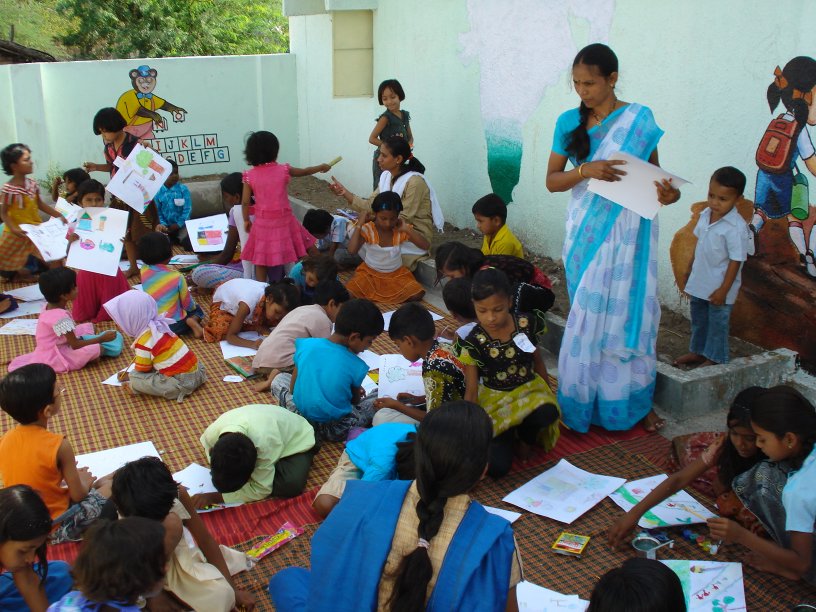
“I’ve recently finished two weeks teaching very large classes of children from slum areas in Shahadhara in east Delhi. At first I couldn’t cope with it, or I felt I couldn’t cope with it. Then I became rather accustomed to it and I've missed it on leaving.

Classes were hectic affairs with anything from 45 to 70 children there. Shabbily dressed with big open smiles and irrepressible enthusiasm. I say hectic because children were coming and going from the classroom during the class. When I commented on this I was told that it was better than before!

These classes were usually conducted in half built Buddhist viharas in the slum districts. The conditions were extremely basic. Blackboards, when there were any, were crude and basic. Power cuts would frequently plunge the vihara into darkness. Equipment minimal. Paper rare and books next to non-existent.

We travelled to these outreach classes on rickshaws or in auto-rickshaws “tuk-tuks’ through the chaotic Delhi traffic. All manner of traffic: bicycles, motor bikes, ox carts all vied with lorries, buses and cars. The rules were pretty minimal, nobody worried too much about traffic lights or the right of way, not everyone even drove on the same side of the road. I confess I found it all rather exciting.

Outside the vihara there was the seething mass of humanity: beggars and street vendors, endless stalls and tiny stores; incessant activity and the omni-present smell of sewerage. Sometimes our classes were conducted in order to increase the harmony in conflict torn communities. Occasionally they were in relatively harmonious Buddhist communities. Their poverty was what they all had in common.

After two weeks’ I was used to it! The classes were led by two spirited individuals – Shiasnu (Joy) and James Goodman – who against all odds managed to maintain their teaching. We were working for ADEPT – the Amida Delhi Education Project Team. At first I can’t say I really I really warmed to their approach, which involved lots of song and movement. Then I realized that actually it did really work because it motivated and enthused the young learners. Mostly I’ve been used to teaching adults so it was a bit of a culture shock. The sessions with the children didn’t seem like ‘real lessons’ but then I'd been thrown into a situation where they didn’t necessarily have blackboards, only occasionally notebooks, and so on. Use of movement motivated them and they clearly enjoyed the classes. Whenever someone did well Joy would call out ‘give that child a sticker’ and they would proudly walk out to the front of the class to get their sticker. The teachers refused to allow any smacking to discipline the children and they tended to get overexcited and classroom control seemed problematic. Then I started to realize that they were actually succeeding in increasing the confidence and self-esteem of these children.

At first I found it all rather exhausting and overwhelmed by these classes. Delhi in midwinter was a hard way to start in India, not even the food would stay in my stomach! Everything, just everything had changed. But I got used to my little room on the roof of the block, even when the cold North West winds blowing off the Himalayas tried to invade it. My tolerance of noise shot up, and later, as I started taking tea at roadside cafes with the workers, neighbours started to recognize me, little routines started to take over – and then, so quickly, my stay there was over and it was time to take the train south to Nagpur and more English teaching with the TBMSG’s many projects there…

Labels: , , ,

Thursday, January 31, 2008

Karuna's success with new fundraising initiatives

The FWBO’s Karuna Trust has teamed up with Global Giving, at www.globalgiving.com, a US-based website which describes itself as an ‘eBay for international development’, and is in fact run by the former ‘eBay for Charity’ chief Sharath Jeevan.

Visitors to the site can choose to donate to a list of grassroots projects, some run by local NGOs and some by larger development charities: Karuna have already raised US $7,000 from the scheme for two projects. A UK-based Global Giving website will be launching in Spring 2008.

One of Karuna’s Global Giving projects is helping Dalit 'low-caste' village women combat exploitation; a second aims focuses upon stopping Child-Labour in workhouses where the children are forced to make cheap 'bidis' (the local word for cigarettes). Both provide direct assistance to Karuna’s main partner community in India, the Dalits. Click either link for more information or to donate.

One of the features of the Globalgiving approach is that it enables supporters to direct money to a specific project that they can then follow, as donors get emailed updates on the project at regular intervals.

Globalgiving is part of a wider strategy at Karuna of broadening out their search for funds; over the past five years they have rapidly expanded the number of partner organisations in India (see previous FWBO News report on the 2007 Karuna partners conference in India) while at the same time, it has been harder to find volunteers for door-to-door fundraising even as that approach has itself become increasingly competitive in the UK. This has put Karuna’s finances under some strain, especially as most fundraising these days brings in what is known as ‘restricted income’, ie income that can only be used for one specific project.

Karuna were therefore delighted with their recent ‘upgrade mailout’, an appeal to most of their 5,000 regular donors in the UK to consider increasing their regular donations; this resulted in no less than UK £35,000/year additional income, almost all of which will be used to benefit TBMSG projects in India – these have traditionally been funded from Karuna’s door-knocking appeals ie ‘unrestricted income’.

Many of the TBMSG Trusts in India are currently shifting onto ‘project-based financing’, which will open the doors for them to raise funds in many more arenas – we hope to bring more news of this soon.

Karuna still have some vacancies for their appeals in 2008, please check the Karuna Appeals website or their Appeals blog for some first-hand accounts by volunteers on past appeals. They offer a generous support package and full training. You can also contact them direct on +44(0)207 700 3434 or email the Karuna Appeals Team for more information

Labels: , ,

Thursday, January 24, 2008

New Centre in Kerala plays host to visiting Order Members

Late last year Dhammacharinis Nagasuri and Sraddhajyoti were hosted by the new TBMSG Centre in Mynagappally, in the district of Kollam Kerala, in southern India. Click here to read FWBO News’ report of its inauguration. They were the new centre’s first visitors from outside the State and the small sangha there made the most of the opportunity - with some 40 people coming for the different functions through the day. The day featured two talks by the two visitors, one in English and one in Hindi, both translated into the local language Malayalam, both focusing on the theme of the “Importance of Five Precepts in Daily Life”.

Nagasuri is from Australia, but currently living in India and working for the Arya Tara Mahila Trust, – unique in that it is pioneering Dharma work in India entirely run by women for women. Sraddhajyoti is an Indian Dhammacharini from Mumbai and was ordained in 2002. They were touring South India as a follow-up to a more high-profile tour last year led by Subhuti.

The day was hosted by Binoj Babu and friends, who make up the group of mitras running the Centre (there are no Order Members in residence), all of whom are recent graduates of the TBMSG training institute at Nagaloka, in Nagpur, a thousand miles north in central India.

Labels: , , ,

Wednesday, January 16, 2008

Impressions from India – the second National Buddhist Youth Conference

Ann Dennehy is a mitra and English teacher from the FWBO’s San Francisco Buddhist Center. She sends us this report from India -

In December 2007 the National Network of Buddhist Youth (NNBY) held its second annual conference at TBMSG’s Bor Dharan retreat center, just outside Nagpur in central India. It was a gathering of the next generation of Buddhists from all over India, and was entirely student-led and organized, with just a little help from my friend, Dhammachari Kumarjeev, a leader of the TBMSG’s Dhammakranti project. 130 people attended the first conference in 2006, and this year there were 600 people. Next year they hope for even more! I was invited by Kumarjeev to attend as part of a team of 5 trainers to work alongside him, Subhuti, and a team of student leaders.

Each day consisted of meditation, dharma talks, various sessions (or "offerings" as we called them), pujas, and oh yes, delicious Indian food. Since I teach English I was there to offer English; basic conversation practice, grammar review, pronunciation improvement. I also met spontaneously with students one-on-one and in small groups as they approached me, offering specific language advice and encouragement. The other trainers offered sessions in NVC, drama, team-building games, aikido, study skills, time management, and many other activities.

As I spoke with students throughout the week I asked what they were enjoying - they spoke of the friendships they were making, how much they enjoyed Subhuti’s playfulness and his serious commitment to the legacy of Dr. Ambedkar and abolishing casteism in India, and all the practical skills they were learning from the different sessions. Some told me how they struggled with self-confidence, others how much their self-confidence has grown since last year's conference. I was very impressed by their sensitivity, their emotional clarity, and their honesty. In my sessions I noticed how eager students were both to learn and to play, how direct they were in asking for what they did and did not want from our time together, how supportive they were of one another's learning, and how rapidly they were able to absorb and apply new information. It was the most fun I have had in my 17 years of English teaching.

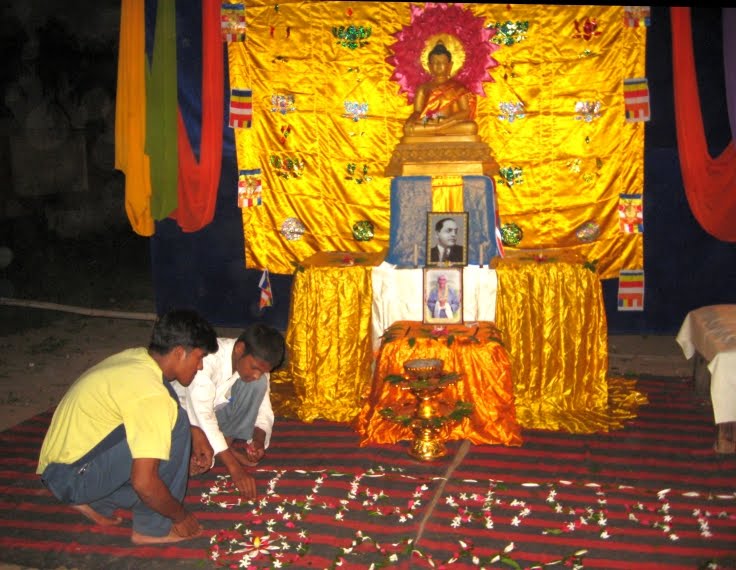
On the retreat myself I had good company in my roommate Sucitta and we fell asleep each night talking of India, and woke up giggling. I enjoyed so much my own deepening friendship with Kumarjeev and his family, the other trainers, the Indian Order Members, the student leaders, and the many many students I met during the week. I was in awe of Subhuti's clarity in teaching the dharma, in explaining the legacy of Dr. Ambedkar, and conveying the urgency of abolishing casteism once and for all in India. The students were completely engaged as he spoke, scribbling in their notebooks, laughing at his Bollywood filmstar references, following his chanting with vigour. I was enchanted watching the kitchen staff prepare lunch; the men stirring enormous pots of rice and vegetables, the women making chapattis for hours. I had fun dancing bhangra in the girls' dorm, polishing our nails, and painting our hands with henna. I was impressed by the concentration and mobile phone coordination of the student team and the way they built an extra dorm on site to house an unexpected 50 participants who arrived in the middle of the night. I was captivated by the art offerings that appeared each day; a multi-colored sand painting on the floor of the stupa of the Buddha, a detailed pencil drawing of Dr. Ambedkar, a relief made of mud, outdoor shrines that changed nightly.

I learned so much myself of Dr. Ambedkar's historic conversion 50 years ago, his commitment to ending the horrific caste system in Independent India, his devotion to his ideals of Liberty, Equality and Fraternity, and his inspiration from the Buddha. All the Indians present, the majority of whom were Dalits and from the community once labelled "untouchable", have known the oppression of the caste system personally, and expressed such heartfelt appreciation for Dr. Ambedkar – yet seemed so optimistic, so joyful, so motivated by his example. Understanding the impact of Dr. Ambedkar is essential in understanding Buddhism and the TBMSG in India, and hence to what unifies our world-wide movement. I left the retreat wondering how I might share his legacy with the North American sangha.

I have never before received such gracious hospitality as I did on this retreat – it was continuous, from the red rose at the welcome ceremony, to the smiles and tiny flower buds offered throughout each day, to the songs, poems and garland at the New Year's puja on our last night, where about 50 people became mitras, and we all threw flower petals at midnight. It was all so gorgeous! The whole week was such an inspiration. I left feeling deeply moved by the spirit, creativity, and love of all the young people I met. They are so radiant, so dynamic, so energetic that I imagine them as beams of light shining out all across India, illuminating their own studies, illuminating their families, their peer groups, illuminating their sanghas, illuminating their entire community.

Jai Bhim!

Labels: , , , ,

Tuesday, January 08, 2008

1,200 people on retreat at Bodh Gaya

FWBO News is delighted to be able to finally present reports on the three major retreats recently organised by the Dhammakranti project. They estimate that around two thousand people have benefited from these events – all the more remarkable in that they were held in northern India, a thousand miles from TBMSG’s ‘homeland’ in Maharastra. This testifies to their increasing success in ‘breaking out’ and making effective contact with people from other castes and living in other States.

The retreats were held in Bodhgaya, Jalandhar and Haryana, and were followed by a north India Dhamma tour led by Subhuti. This report covers only the Bodh Gaya retreat – there’s more to come…

First came the International Dhammakranti retreat at Bodhgaya, which had as its theme “The life of the Buddha”. This was a five-day retreat attended by around 1200 people - men, women and children - from 16 states of India. Nagaketu, the retreat’s organiser, told FWBO News “It was very pleasing and satisfying for the participants to know Buddha in the place of Enlightenment of the Buddha. They could relate directly to the Buddha, Dhamma and Sangha, they could see history revived before them”.

For four consecutive days special Pujas were arranged at the Mahabodhi Temple, with two being held right under the sacred Bodhi tree. The highlight and culmination of the retreat were the ‘Mitra Ceremonies’, simple ceremonies of commitment performed all over the FWBO and TBMSG, where more than 100 participants from different parts of India became Dhammamitras under the Bodhi tree on 16th Nov 07. As Nagaketu put it “These new Mitras accepted Buddha, Dhamma and Sangha as their highest ideals in their lives”.

Various cultural events adorned the retreat, such as ‘Kawwali’ songs (by a group from Lucknow), a mime show (by Varaprabha) and dramas and songs by children, plus special games & programs for the children. Finally, at the end of the retreat, a special pilgrimage tour was arranged to visit Sarnath, Varanasi, Nalanda, Rajgir, all places associated with life of Buddha and Buddhism.

The last word should go to Nagaketu, who told us “The participants were very positive & at their spiritual height. Thanks to the retreat they could experience a living example of a caste-free society and Buddhist community. Hence they gained more faith in the Three Jewels.”

SADHU DHAMMAKRANTI

Labels: , , ,

Saturday, December 29, 2007

Retreat in Pondicherry, Tamil Nadu

Ashvajit, currently on a Dharma-teaching tour of South India, led a day retreat in Pondicherry on 25 December. Most of the thirty retreatants worked for ADECOM, an organisation that co-ordinates the activities of various Dalit NGOs in Tamil Nadu, and which has for some years been one of Karuna's partners in India. All were from Dalit (ex-untouchable or other low-caste) backgrounds, most of them young and thirsty to find out more about how Buddhism might relate to the their plight – caste discrimination is still very strong in southern India, as was graphically illustrated in the caste-based rescue operation after the 2004 Tsunami.

As is customary, the retreat began with songs expressing devotion to Dr Ambedkar, the universally acknowledged hero of the Dalit peoples, and the chanting of the Refuges and Precepts in Tamil, followed by an introduction to meditation and meditation sessions led by Ashvajit. During the question-and-answers following there were also pointed remarks made about the unfavourable impression given by Sri Lankan bhikkhus in the ongoing difficulties between the Singhalese majority and the Tamils in the North and East of Sri Lanka.

After the day, Ashvajit commented that there is evidently a burgeoning of interest in Dr Ambedkar and the Buddha-dharma in Tamil Nadu, where one can see ample architectural, archaeological and literary evidence bearing witness to the fact that Buddhism once flourished in the area. He concluded by saying “If there is to be an early renaissance of Buddhism here, however, many more properly-qualified Buddhist teachers are needed in this southern Indian state of 70 million people”. By happy coincidence, January sees a week-long India-wide Convention of our Order in India that will be devoted to exploring ways of providing more training to respond to the vast need for Dhamma teachers across the length and breadth of India.

Labels: , ,

Saturday, December 22, 2007

Dhamma teaching tour in Northern India

Subhuti and the Dhammakranti ‘outreach’ team have just finished a long and packed Dhamma teaching tour of Northern India. This followed immediately from the massive ‘Jumbo’ retreat at Bodh Gaya, which we hope to report on shortly – we are waiting for photos and some more eye-witness reports.

The tour began in Kusinagar, site of the Buddha’s Mahaparinirvana, with a public talk by Subhuti in the Shrine Hall of the monastery. .Maitriveer Nagarjun, one of the organizers of the Dhammakranti project, commented “The programme was especially wonderful due to the presence of 80 participants of the Dhammakranti Retreat, which had just finished”. Subhuti spoke here on the importance of ethics, or shila, in the creation of a just society. He commented that these days many people are aware of the name Buddha, but unaware of his teachings.

The following day saw a public talk in a small remote village near Kusinagar, where most of the local Buddhists were ‘Dalit’ followers of Dr. Ambedkar and, as such, leading lives typical of the millions of agricultural laborers in India – hand-to-mouth daily wages, illiterate, and poor. Subhuti spoke here of the disease of inequality and its roots in the Indian idea of Caste, which he described as being deeply rooted in the mind – meaning that liberation would come from training the mind to reach, instead, a state of equality and freedom. He explained also Dr. Ambedkar’s dream of a casteless society based on the Buddhist values of Liberty, Equality and Fraternity.

From there the party traveled for three days 1,000 miles West, where the first ever Dhammakranti retreat was held in the Punjab, in a school run by some Mitras in the town of Phulpur. Some 90 people attended, the school was surrounded by green fields and silence, making it easy to deepen into the atmosphere of retreat. At the end a local school principal and others became Mitras in a ceremony to deepen their links with the Dhamma and our community. The retreat was specifically for new Buddhists, exploring ways they could effectively deepen their sense of Dhamma practice and spiritual community despite problems of isolation and remoteness.

From there to the neighboring state of Rajasthan, another first for Dhammakranti. Subhuti gave a public talk at Alwar, to an audience of Buddhists – many ‘born Buddhists’ whose communities had followed Dr. Ambedkar into Buddhism in the great conversions of 1956 – but who had had no instruction since, and who lived, tragically, in a state which topped the list of Indian caste-based atrocities. Subhuti exhorted his audience to bring into being the Buddhist ideal of a ‘Casteless People’ - to set the path for a casteless, peaceful, and just society for all, and celebrated the life of Dr. Ambedkar, whose life was devoted to just that.

After an evening meeting in Delhi, the party moved on to yet another first, the state of Haryana, 70 km east of Delhi, and another retreat, this time with over 150 people attending, both men and women. This retreat especially benefitted from there being people from many different States present - from Punjab, Rajasthan and U.P. (Uttar Pradesh). This retreat focused especially on meditation, as a system training bringing peace, and also as a potent agent for social transformation.

You can read a fuller account of the tour here. For the Dhammakranti team, life continues biusy - preparations are beginning for their second All-India Buddhist Youth Conference at Bor Dharan, our retreat centre near Nagpur, where more than 500 are expected.

Click here for a map of TBMSG groups in India.

Labels: , , ,

Monday, December 17, 2007

Women in India create new Trust for women's projects

The Arya Tara Mahila Trust is a new Trust helping to support and fund projects for women in India. Its main function is to allow women working in FWBO/TBMSG projects in India to receive funding from outside India without needing to rely on our existing organisations, all of which are mainly run by men. This brings much greater freedom, and of course responsibility - which they welcome.

It is the first organisation in our movement set up by women for Indian women. They have lauched a newsletter, Varada, and produced its first issue. Click here to read it. Among other things it contains reports on their program to combat domestic violence in India (outlawed for the first time only in 2006) and the Karuna Computer Education Centre, their new computer training institute.

They also have ambitious fundraising plans, and say -

"In the next four to five years, we want to develop a retreat centre for Indian women run by a community of Indian women. At the present time, there are three main retreat centres in TBMSG, all run by teams of men.

"We want our retreat centre to be somewhere in central India, accessible to women both from the north and south. This is increasingly important as the Dhamma spreads and grows more and more in other Indian states. We intend in the next year to focus on fundraising in other countries as well as in India.

"For the next year, we aim to raise a minimum of US $150,000".

We would be very happy to hear from you, and you can contact us via email or looking at our website www.indiansisters.org.

Labels: ,

Thursday, December 13, 2007

Charlie Chaplin impressions in India

Varaprabha is an Indian Order Member who has recently begun a new career as a mime artist. It looks like he specialises in Charlie Chaplin impressions – and it looks like he’s very good at it! He writes –

“I am glad to inform you that since last twenty-four years I am performing cultural activities as a cultural activist. Recently I completed Mime Arts course at Dr. Babasaheb Ambedkar University, Aurangabad. I am thinking to make short Mime films, through which such messages will be delivered as, “be educated, be kind, be harmonious, be generous…” and so on.

“Already I have been able to offer a Charlie Chaplin Mime on the theme of addiction for the children at the Mahavihara and also the Destitute Children’s Home in Pune, another, called ‘Charlie and the Thief’ at Latur, teaching the children the importance of earning their living by honest means, and finally an active part in the Film ‘Bodhisattva’, which among other things was advertising for TBMSG. Another Charlie Chaplin piece is in preparation, on the theme of ‘Charlie and the Dictator’.”

Watch this space!

Labels: ,

Monday, December 10, 2007

Thanka painting workshops, and more, at Bodh Gaya

For some years now the FWBO/TBMSG has owned land at Bodh Gaya, site of the Buddha’s Enlightenment. Development on our land has been slow, partly due to its distance from all our other centres, including TBMSG’s Indian centres, plus the difficulty of operating in Bihar – one of India’s most backward and lawless states. Things are now starting to move – over the past two years two very spacious ‘huts’ have been constructed, offering accommodation for visitors and the small residential community, trees have been planted, and activities are beginning.

Thanks to the Nagarjuna Training Institute in Nagpur, there are now ten Bihari mitras in and around Bodh Gaya, plus several who contacted us through Nissoka or Lalitavajra’s Dharma classes there. One of these is Shashi Kumar, recently returned to Bodh Gaya after six years in Nepal, where he studied traditional Thanka painting at the Shechen Monastery, Kathmandu. His father is a well-known carver of Buddhist rupas, with a small shop in the centre of town.

Shashi is planning to set up a Thanka painting studio and tuition centre in Bodh Gaya, and recently conducted a painting workshop on our land. Any visitors are invited to contact him and he is able to accept commissions. Check his website or slideshow for a taste of his work, or email him here.

Also living in Bodh Gaya is Sachin Bhongade, a mitra from Nagpur in Central India – over 1,000 miles away, where the customs and even the language is different. He recently led the local mitras to the big TBMSG retreat centre at Bor Dharan, near Nagpur, for a retreat on the life of Dr. Ambedkar. On his return he sent FWBO News this report -

“I am in Buddhagaya and I was thinking to write you all about the retreat. I took seven youths from Buddhagaya to Bordharan for the retreat. They all are very good friends of mine, and four are from the Siddharth Nagar area – a very poor part of town where the local Buddhists live. I would like to appreciate Dhammachari Ratnaketu who sponsored for the retreat for them all.

"The subject of the retreat was Dr Babasaheb Ambedkar’s great qualities. It was a great time for my friend – the first time ever they experienced a different life to their usual life in Bihar. It was so inspiring for them and enjoyable for us all.

"In the beginning the retreat started in Marathi language (the local language of Maharastra) and that was a big problem for my friends from Bihar so the leader of the retreat decided to arrange a separate class for them. That class was led by Dhammachari Ansulkumar and me. After this was arranged, they mixed very inspiringly and enjoyably in the retreat.

"Then everybody came back to Buddhagaya. In the beginning it was really great for all they were all finding they were different in themselves. And now some of us are getting together everyday in the evening under the Bodhi Tree in Mahabodhi Temple - we do Pali puja and meditation, and every Sunday we have long time class and some interesting discussions about basic Buddhism.”

Editor’s note - It is sad to note that since this retreat, Ansulkumar died unexpectedly in a bad motorcycle accident, and Ratnaketu struck down by a stroke – he is now recovering in New Zealand.

Sabbe Sankhara Dukkha…

Labels: , ,

Wednesday, December 05, 2007

News from the frontline – in India…

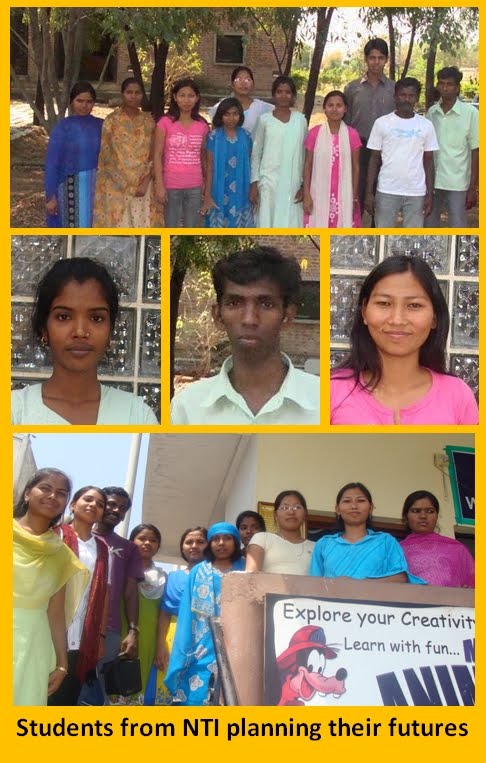
The Nagarjuna Training Institute in India is the FWBO/TBMSG’s largest centre there. It runs ongoing year-long residential courses in Buddhism and social work, training up to sixty young men and women per year, from all over India. At the end of the years training they graduates may either stay on for a second year or return home. Many have done so, and in this way a widespread network of local groups across India affiliated to the TBMSG have sprung up all over India. Once home, the Nagarjuna graduates do what they can to spread the Dhamma given their need to earn money, help their family, and meet the many other demands of Indian life.

In April this year the FWBO Growth Fund gave money to support for a year twelve Nagarjuna graduates in five widely-separated Indian States – Orissa, Kerala, Tamil Nadu, Karnataka, and Rajasthan. The application was for funds to support twice as many, but as the FWBO Growth Fund is small and already over-subscribed six times over it was unable to assist!

Vivekaratna, Director of Nagarjuna, has recently sent us this report. Many other Dhamma projects are also going on across India, not least the recently-concluded and very successful Dhammakranti retreat at Bodh Gaya, which had 1,500 people attending - we hope to bring reports of these soon.

Orissa
Jadumani conducted two seminars in Sumbalpur for college students on the Psychological Effects of Caste and Jaldhar & Panchanand supported him. Around 60 senior college students participated in both seminars. There is good team work among these three ex-trainees. They inspired people to participate in the recent Dhammakranti retreat at Bodhagaya – where five persons became Dhammamitras through their work.

Kerala
Subhash, who was training till August 07, has now joined Binojbabu who had already started Dhamma work in Kollam district in Kerala. They have established a Dhamma centre in Mynagapally in Kolam distt – financed entirely by donations from local people. They are meeting individually and collectively with Ambedkarite activists from Kollam, Kottayam & Alapuzha (Alleppy) districts and conducting day retreats at the center and elsewhere. They organized a programme for Nagashuri & Saddhajyoti who visited last month – see report on FWBO News (forthcoming).

Tamilnadu
Subhash, Manimaran, and Ganesh organised a three days residential retreat at Villupuram in Central Tamilnadu. Vivekaratna led the retreat, which was on the Three Jewels, and 25 persons participated. They were very pleased because they managed to raise money locally to meet all the food expenditure of the retreat – and obtained the acconodation free of cost from a local charity. This is TBMSG’s first residential retreat in Tamilnadu. There is good teamwork between Subhash, Manimaran & Ganesh.

Karnataka
In September Satyam single-handedly organised a retreat in Gulbarga. 23 persons participated in the retreat, and Padmavir & Dhammadarshi led it. Once again, Satyam raised donations locally to meet the retreat expenditures. He is conducting regular dhamma activities, mostly working in Bijapur, Bider and Gulberga districts, as well as keeping regular contact with ex-trainees from Karnataka and encourging them to help in spreading the Dhamma.

Rajasthan
Rambabu is working among the Meena community which is a tribal community. He is especially active in Bharatpur, Dhaulpur, Sawai Madhopur, and Alwar Districts. In addition he has regular interaction with Ambedkarite activists and gives lectures, leads Puja, and clarifies the doubts of the persons he meets. He is specifically emphasizing social transformation through Dr. Ambedkar’s thought – using Ambedkar’s emphasis on Liberty, Equality and Fraternity as Buddhist values for the transformation of society.

This is only a tiny glimpse of the many Dhamma and social projects the FWBO/TBMSG runs in India.

Labels: , , , ,