Google Calendar is an easy-to-use way of keeping track of your appointments - and those of your friends. Now there’s two FWBO calendars publicly available - FWBO History and FWBO Festivals. One gives you significant dates in the history of the FWBO; the other, information on the Buddhist festivals celebrated through the year in the FWBO.
FWBO History is at http://www.google.com/calendar/ical/l4849joc3bekrv20q1n82ker48@group.calendar.google.com/public/basic.ics
And FWBO Festivals at http://www.google.com/calendar/ical/jeuhqvumqevoda6k86bb1gjtms@group.calendar.google.com/public/basic.ics
To use them, go to your Google calendar account and, under ‘Other Calendars’, click “add”, then “add by URL” and paste the above two links in one-by-one. Meanwhile the one above is fully-functional - and we'd love to be informed of other dates, eg the founding of FWBO Centres around the world...
More reports from the Buddhafield Festival are coming in, thanks to the 'Google Alerts' facility.
Geckoface says "I've spent the last week at Buddhafield. To sum up, it was amazing." She goes on to explore the Mystery of the Chai Lady, saying -
"There is a myth that the Chai Lady roams Buddhafield. She has been sighted in the morning between 8 and 9am with large thermos flasks filled with chai made with rice milk. She sings with a haunting tune that no one can quite remember, with the words "chai, buy my chai, lots of chai, buy my chai, vegan chai". No one can remember her face or quite what she looks like. Those who have seen her are not sure if it was real. There is no hard core evidence for her existence.
"We believe we had a sighting of the Chai Lady on the morning of July the 20th. Also, on the morning of July 16th, I heard her voice in my dreams though it turns out others heard the voice too, so perhaps it was real. We bought her chai and I snapped a picture but I only managed to get her from behind so we have no proof that it is the real Chai Lady".
Realfoodlover reports "I went to Buddhafield festival and became a kitchen fairy." She says -
"I was sitting in a Bedouin tent, as one does, listening to Martha Tilston on stage at Lost Horizons, the legendary travelling café and wood-burning (mostly naked) sauna.
I heard a cry above the music:
“Can someone stir the milk? In exchange for a chai. Can someone stir the milk?”
“I can stir the milk,” I said.
In the field kitchen, backstage at Lost Horizons, a wooden spoon in hand, I stirred a cauldron of milk coming to the boil. A dramatic creature with blonde curls, tight trousers and a rocker’s face appeared..."
And PedalPowerAdventures ("A journey across the length of Britain, stirred with thoughts on how we can use the power of personal choice to make the world cleaner, greener and generally just a better place to live") reports -
"An interesting time at Buddhafield, hard work with heavy rain every day and lots of mud. Found an almost new pair of thermal wellys in a hedge the day before arriving, true confirmation that the universe provides. Gave them away when I left to a guy who was planning to spend the winter on the top of Exmoor, felt good to pass on the good fortune..."
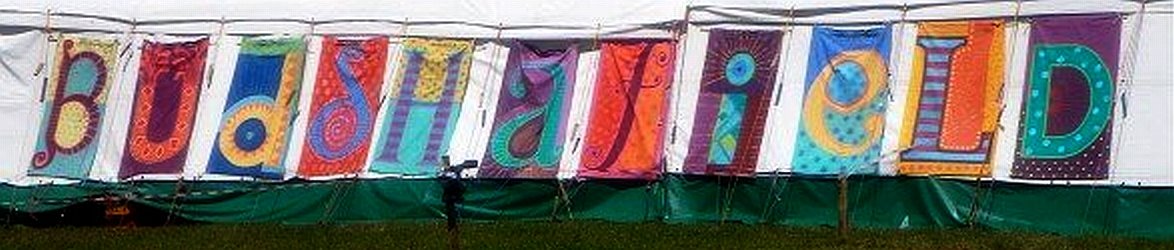
Coming up soon is the 14th Buddhafield Festival – the FWBO’s largest annual event outside India, and much-loved by many people.
The theme this year is ‘TRUTH AND BEAUTY: skilful living in a changing world’, and you’ll find more details including how to book on their website http://buddhafield.com/budffest.html
To quote a little of the review from last year’s ‘Festival Eye’ (Britain’s annual festival ‘bible’) –
“Buddhafields began on the M5 with my guitar and big bag, my hat adorned with all the gifts of special people over the past years and my thumb stuck out into the road.
“I was in Birmingham and Buddhafields was in Devon and it was 4 in the afternoon. Many distractions, many faces. Only three cars later and three very happy smiling faces ending with a beautiful¬ly simple country couple who only knew how to help people I arrived at 8 o'clock, almost quicker than if I'd driven myself, I was dropped off at the gate. "I'm a journal¬ist"...I never tire of saying that. My ticket in was a handmade clay pendant... the first simple touch of magic that Buddhafield's gives as standard. I pitch my tent next to Sam's Sauna, my second home.
“I see and greet the ever-present festival faces that appear in each field that I live in each year and I never tire of them either. The Small World chatters folk into the night behind the hedge that grows between my home and my play ground for the next days. It lives next to Moon Beams and Beth, three of my favourite festival things.
“Buddhafield's is as close... so far... as you are likely to come to a perfect community of beings living and celebrat¬ing the way we all know we should be. We all know how and at Buddhafields we are reminded of that. No drugs and drink leave the air and the smiles as clear as crys¬tal. Add countless children, the Chai Chapel, a lost horizon with a sauna in it, a tribal Tent called Triban, some mud, but also a lot of green grass (very rare in 2007 as I'm sure you are all aware), a community notice board, some pirates, some fairies, some horses, many medita¬tions, many dances and dancers and many naked people including myself and I think you understand. I love it, totally”.
Tickets are selling fast but there are some left.
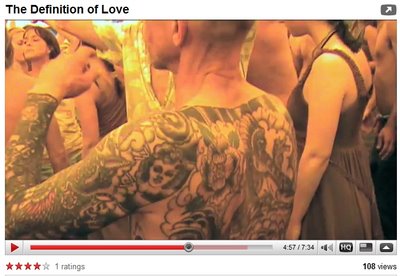
To further whet your appetite here’s a video ‘The Definition of Love’ created by Jess Brand of Bristol, out of footage from last year’s festival... She says -
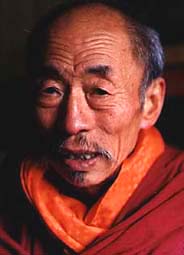
Next Sunday, July 12th, Padmaloka will host a festival day for Dhardo Rimpoche, Sangharakshita’s teacher and friend in India.
It is open to anyone (men and women) who feels a connection with Dhardo Rimpoche and would like to come and celebrate his life and teaching with the Padmaloka community.
“The FWBO’s Dhammaloka International Buddhist Study Centre in Sarnath, India, has been busy of late. First came ‘Sangha Day’, on the ‘Kartika’ full-moon day of 13th of November. This was celebrated by Buddhists all over Sarnath in a spectacular, devotional and grand 3-day festival.
“The highlight was the display of sacred Buddha relics, for which there was an all-night special puja and recitation of Buddhist texts. The whole village of Sarnath was decorated by thousands of lamps, flowers, incense and Buddhist prayer flags. There were several devotional and cultural programmes taking place in numerous Buddhist monasteries near the Deer Park.
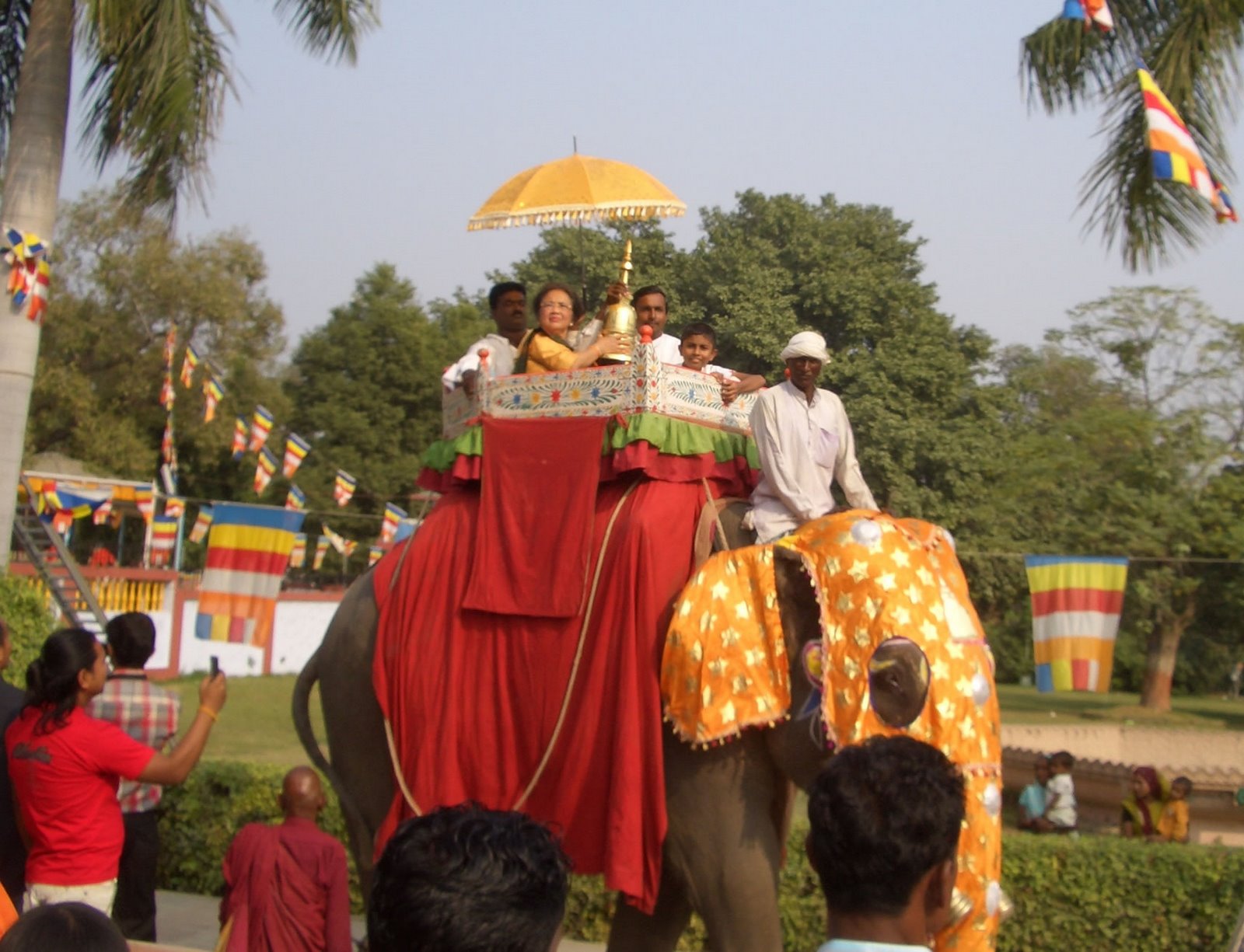
“The most magnificent event was a procession carrying the sacred relics of the Buddha on 4 decorated elephants by chief guests Madam Nancy Lim from Singapore and Madam Ratsyog of France, which paraded through the main roads of Sarnath. They were followed by Venerable Sumedha Thero, the Bhikkhu-in-charge of the Mahabodhi Society Sarnath, monks, nuns, Dharmacharis, Mitras and thousands of Buddhists from many nationalities.
“As part of the celebrations, I and others organised a special puja for Mitras on our land at Sarnath. Dharmachari Bodhisagar led a special puja and I gave a talk about the importance of commitment in spiritual life.
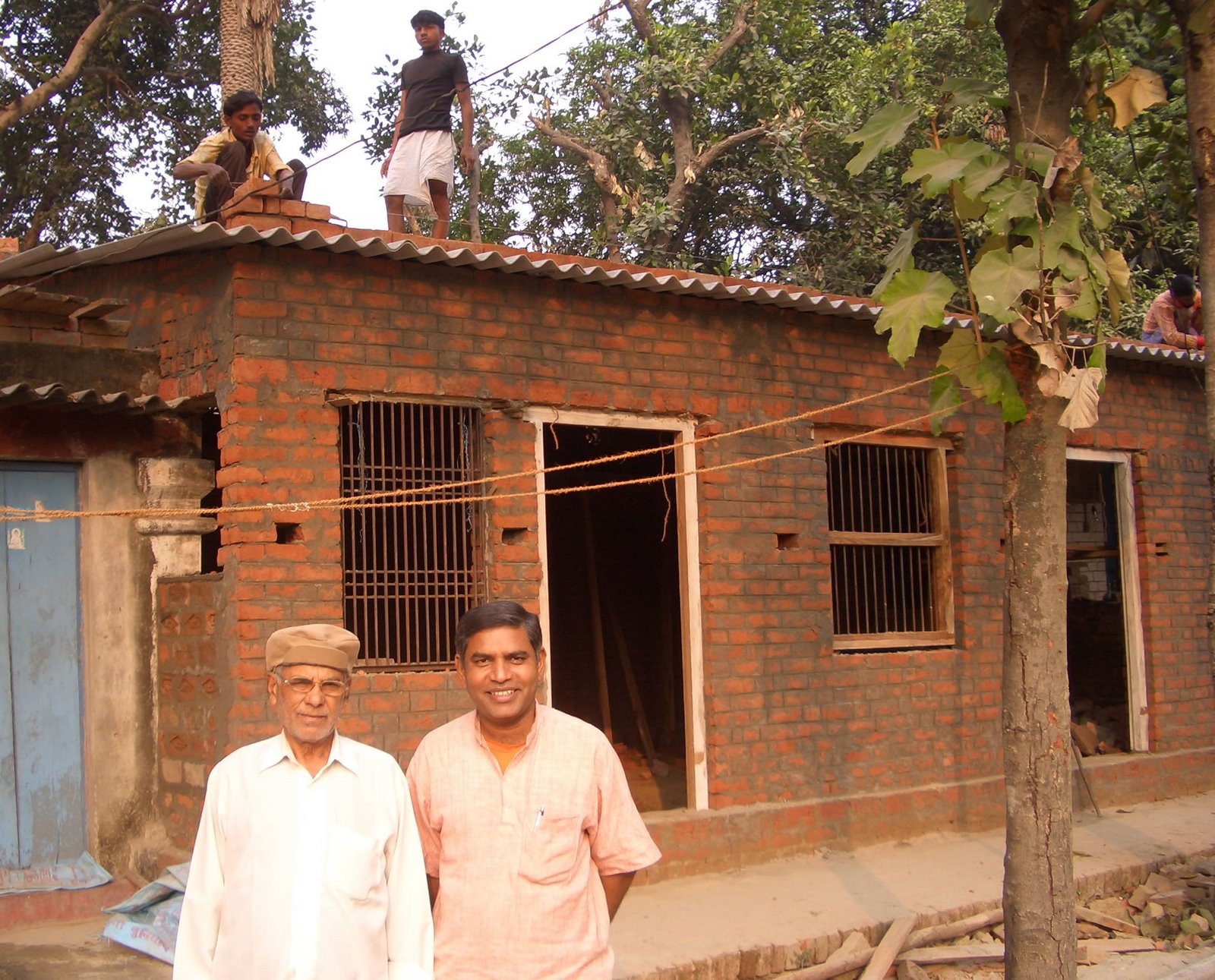
"The event took place in the newly-built shrine room which you can see under construction in the photo opposite. The shrine room was built by Bodhisagar and myself with the help of the local Sangha. The building work is ongoing – so far the total expenditure of construction has reached up to INR 75,000/- (approx UK 1,000 pounds). Still some work is going on and for the remaining work we will require 40,000 rupees (UK 500 pounds) more for finishing. At present I am back in UK but Bodhisagar has written to me to say ‘Please manage this from any source.’
“We have plans to install a Buddha statue on the land and develop washing facilities for visitors and the resident community. So, generous donations and financial contributions are most welcome. You can give online by visiting www.justgiving.com/sarnath."
"Yours in the Dhamma,
Manidhamma
If you would like more information about Dhammaloka publications and activities, please contact Manidhamma by emailing manidhamma@hotmail.com or by calling Bodhisagar in India on +919411109061.
Akasadaka, an Order Member from the FWBO’s Sudarshanaloka retreat centre, high in the Coromandel Mountains of New Zealand, writes to say -
“Buddhafield is manifesting deep in the South Pacific in the land of the Kiwi.
Our mission is to build up a community of like-minded Dharma practitioners and create the first ever Buddhafield Festival down under. It's going to be an organic process thing!
“We are currently based at Sudarshanaloka in the Coromandel Ranges. Every year we attend Prana Festival so plan if you can to come, it’s 5 days of good people, good food and good vibes.
“Recent News? Well, preparation for Prana is well under way, Jayaghosa has been working hard along with the help of Matt and Rosie. We have a full program of workshops planned, as well as Dharmamudra coming to lead Taiji. There’ll be space for Dharmavaca (Dharma Discussion) in the evenings”.
He ends by saying “If you are coming do not forget to bring a costume for New Years Eve, theme is masquerade but don't let that stop you from going a bit mental...”
The Buddhafield ‘family’ now includes Buddhafield itself; Buddhafield North, Buddhafield East, and more – on the web there’s distant fond memories of a Buddhafield Ireland… All share a love of Buddhist practice in the natural world; all delight in the magic that happens when like-minded people come together – and all are willing to put in the hard work it takes to make something happen out-of-doors…
The 13th Buddhafield Festival ended yesterday, with over 2,500 people heading home after a rich weekend on Buddhafield’s beautiful new site in the Blackdown Hills, Somerset. It was Buddhafield’s largest-ever festival and something of a risk given the new site and the increasingly uncertain weather of the British summer.
The Festival was dedicated the theme of the Six Elements – Earth, Water, Fire, Air, Space, and Consciousness, with rituals each day dedicated to one of the Elements. For Water, for instance, those participating gathered by the side of the lake for the recitation of verses of meditation. On the last night, for the closing ceremony and to celebrate the element of Space, many papier-mache hot air balloons were lit which flew up into the air and away – a beautiful sight.
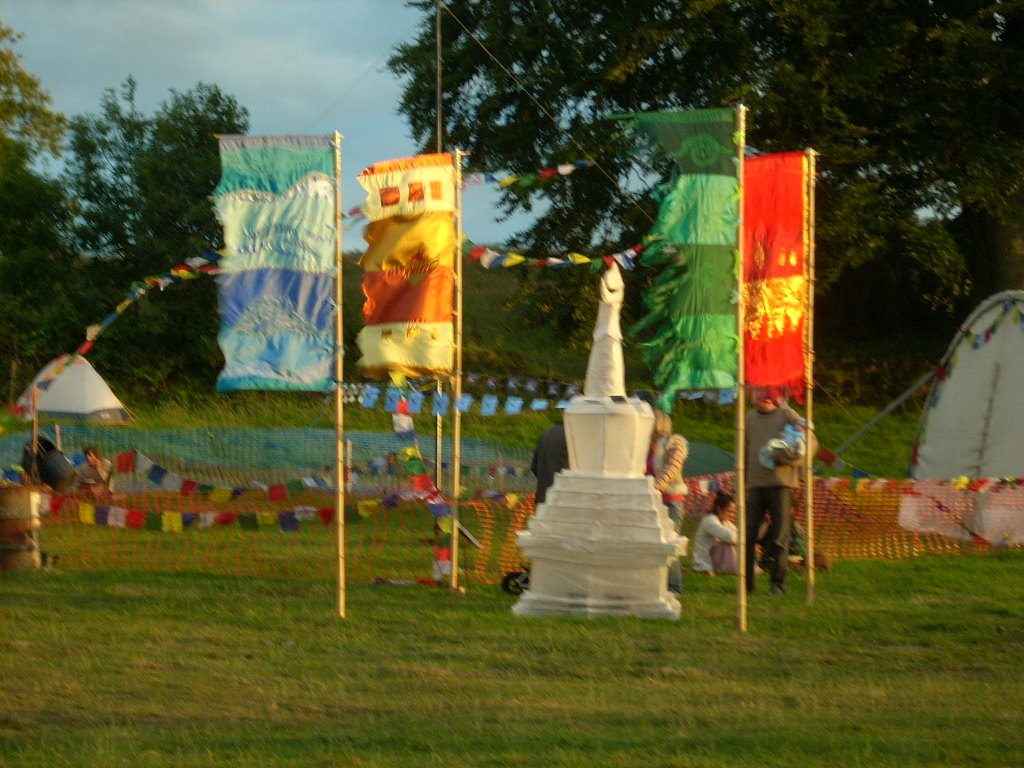
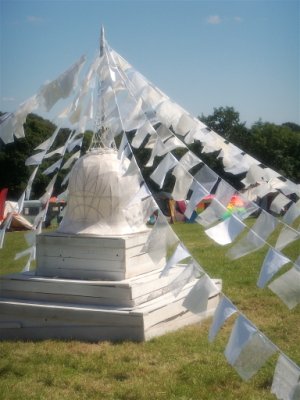
Some photos can be seen in the attached slideshow or on FWBO Photos, FWBO News would welcome links to other online photos from the Festival – just let us know by posting a comment on this post. The slideshow takes you on a journey through the Festival, from arrival, to meeting the stewards, to the opening ceremony, the many shrines, a whistle-stop tour of a small selection of the hundreds of gems scattered through the site - and last but by no means least, a study of the remarkable paper stupa in the centre of the site.
Further to our notice about the lineup for the coming Buddhafield Festival, FWBO News has come across a review of last year's Festival, just published in the annual UK magazine Festival Eye. Festival Eye is the UK's festival bible, coming out once a year, carrying reviews of last years' festivals and the dates for the current years'. Last year's review of Buddhafield is wonderful - we print excerpts below...
"Buddhafield's is as close... so far... as you are likely to come to a perfect community of beings living and celebrating the way we all know we should be. We all know how and at Buddhafields we are reminded of that. No drugs and drink leave the air and the smiles as clear as crystal. Add countless children, the Chai Chapel, a lost horizon with a sauna in it, a tribal Tent called Triban, some mud, but also a lot of green grass (very rare in 2007 as I'm sure you are all aware), a community notice board, some pirates, some fairies, some horses, many meditations, many dances and dancers and many naked people including myself and I think you understand. I love it, totally."
And from another reviewer - "Buddhafields is such an invitation to play, dress up, dance until you sweat so much you want to take off your clothes, till the earth vibrates so much under your feet that you want to cover yourself with it... dance till sunset, dance till dawn.. in silence.. the whole site turns silent at night... you can hear the fairies breathe.. the earth children gather in tents, or go to their nests in dream land, warm up in Sam's sauna or around the fire of Lost Horizon.. tell stories, have funny competitions, better be a nudist, a pirate or an earth woman...
"At the top of a hill, some bells, some shrines and meditation tents.. that's where non stop, someone is in meditation. It is Buddhafields.. the fields where you're invited to be as playful as a laughing buddha, playing with appearances of this world..."
Click here to read the full reviews. Sadhu Buddhafield!
This year's festival runs from July 16-20th in Somerset, UK.
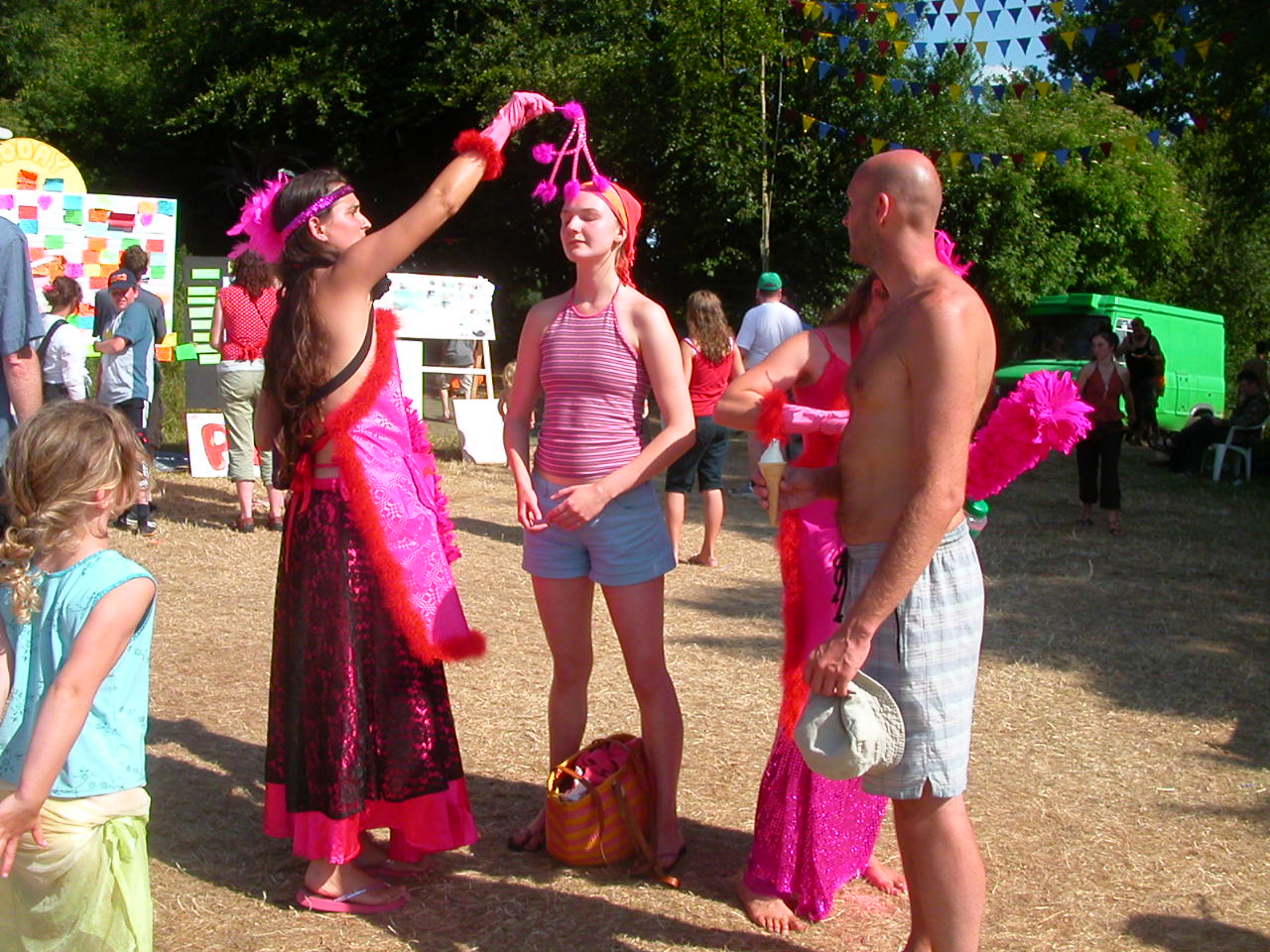
The photos are from the Ecstatic Dance tent at the Buddhafield festival.
Khemajala, from the Karuna Trust's fundraising team, writes to FWBO News to say -
“Readers of FWBO News might like to know we have a team of volunteers in North London right now. They’re walking the streets and talking to the good people of North London. Jo, Naomi, Abhilasa and Paddy are halfway through their six weeks of door-knocking appeal; please bear them in mind as they do this vital fundraising.“If all goes well they’ll raise many thousands between them for our many projects in India – last year we raised a remarkable £87,968 annually. And since most donations are by standing order, the money just keeps on flowing long after the appeal is over!
“If you want to keep up with their story Jo Robinson is blogging away on most days on the Karuna Appeals blog. It makes great reading...
Here’s a taste.14th June: Cultivating passion"Hi, I'm calling from a charity". "You best come in then, but I'm telling you now I'm not signing up for a standing order"."I feel the warmth of the hallway and the house immediately, and realise that it is a little cold out there walking the streets. It is a familiar warmth to me, the warmth of being invited into someone's home, I am immediately grateful.
My eyes scan the room, letters opened on the table, a work pass that says BBC on the counter. "Ah, you work for the BBC" "Yes", "what do you do there?" "I'm the World Services' Africa correspondent". Ah, I think, how interesting, we are going to get on well.
"So, what do you want from me?" "Well, I'll tell you it straight there's no point in mucking around...I want a standing order...". I grin...he grins, "or a donation" I add, realising that this man is relatively rich and might give Karuna a big fat cheque."He tells me he had a Dalit cleaner when he lived in India. Tells me that the cook of the house said that if the cleaner was ever allowed in the kitchen of the house, she would resign as his cook. He tells me he hates Hinduism because it fosters this sense of when you're born you're screwed, you just have to put up with your lot…” Read more here...
The FWBO’s largest event outside India is the annual Buddhafield Festival, now in its 13th year and going strong. From 350 in 1996 it’s grown to around 2,500 people – small enough to retain the intimacy that’s one of its hallmarks, yet large enough to contain an extraordinary diversity of, well, everything!!!
This year they’re moving to a beautiful new site just a few miles from the old one on the Devon-Somerset border. They’ve written to FWBO News to say –“The new site is secluded and peaceful, away from roads, with coppice woodland, and plenty of space. We’ve been hard at work preparing for this year’s Festival – and it’s coming up soon! We warmly invite you to join us – and please do tell your friends. It’s a great way for them to meet a bunch of Buddhists and get a taste of what we’re about”.
Here is a sneak preview of some of this year's programme (all included in the ticket price!!):
Kids Area: AMAZING and varied range of activities for kids - trampolines, dressing up, carnival processing, crafts, bushcraft and nature awareness, storytelling, toddlers' space, daily theatre extravaganza; Teens Space.
Bands: Gadjo Club (superb Gypsy Balkan Jazz); Seize the Day (protest folk stalwarts); Green Angels (upbeat Breton dance); Vogue Gyratory (Brighton faves, 7 piece funk-reggae); Manjinga 7; Toggy Mess (upbeat Irish folk); Manos Puestas (super-spicy flamenco jazz); a variety of fantastic DJs, including Matt Black of Coldcut (Thurs pm), followed by Cinema
Poetry and art: Inter-Ference; open mike poetry evening; Poetry Slam; 'The Big Q' play written specially for Buddhafield!; The Buddhafield 'Artery'; carnival costume-making from found natural materials; creativity and poetry-writing; Mr Be, mime, clown and family show; Stilted butterfly walkabout; Marionettas giant puppets.
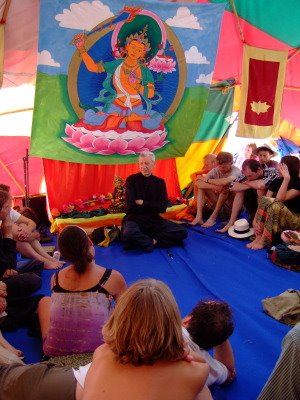
.Dharma Parlour and meditation: talks and discussions on Buddhism, speakers from the Western Buddhist Order and other traditions, including Christopher Titmuss. Meditation teaching from FWBO teachers and others. Ceremonies and devotional practice. Network of Engaged Buddhists; Amida Trust, and others.
Workshops: MASSES of all-day yoga, Tai Chi and Chi Gung. Healing Area, great range of alternative therapies, pay by donation. Dozens of workshops to die for, including Ecstatic Dance with Jewls; 5 Rhythms with Jo Hardy; Brazilian Forro; Indian Classical Dance with yoga/visualisation; Shamanic Trance Dance with Zilia; many more dance workshops; 'Soulful Singing' with Mahasukha; 'Voice as Sacred Instrument'; Tibetan singing bowls; tin whistle, bodhran, drumming; daily Buddhafield Community Rhythm event; 'Work that Reconnects'; Transition Towns; big debate on Climate; Palestine Peace Campaign; Non-violent Communication; Skilful Flirting; Heart-to-Heart tantric workshops; Green babycare on a budget; Shamanic Journeying from Northern Drum….
Special Spaces: the 12 Step Dome; Women's Space; Land and Permaculture; Radical Midwives Space for pregnant women and new mothers; Queer Spirit Space; Crafts Area; Wildheart Medicine Wheel Space; Dzogchen and Big Mind teachings; bushcraft; tracking; fire making; sky-gazing meditation.
Saunas including Lost Horizon, featuring chillout space and cabaret; cafes including the Buddhafield Café with strolling musicians. And last but not least, wood-fired showers and compost toilets; all power on site from the sun and wind.
The 2008 Festival runs from Weds 16th to Sun 20th July. The site has good public transport links; nearest train and coach station is Taunton (direct trains from many towns); there are a couple of local buses each day from Taunton direct to the site. There's also special festival mini-buses going direct to the site and back from Bristol, Brighton and London. See the Buddhafield Festival website for details. Don't be put off by the rather severe website by the way - look at the pictures to get a sense of what it's really like!
But PS - don't forget to book soon! See you there! ;-)
Chandrabodhi has sent FWBO News this report of the first ‘Buddha Festival’ in India. Publishing it was delayed until we had received photographs of the day – however we are now pleased to present it to you. The event had an added significance in that it was the successful culmination of an ‘internet fundraising’ appeal by one of our Indian centres; they were delighted to be able to raise UK £733 for the event in little over a week! This was thanks to a new facility on the ‘justgiving ‘ website – see www.justgiving.com/chandrabodhi for details of the appeal.
Chandrabodhi writes -
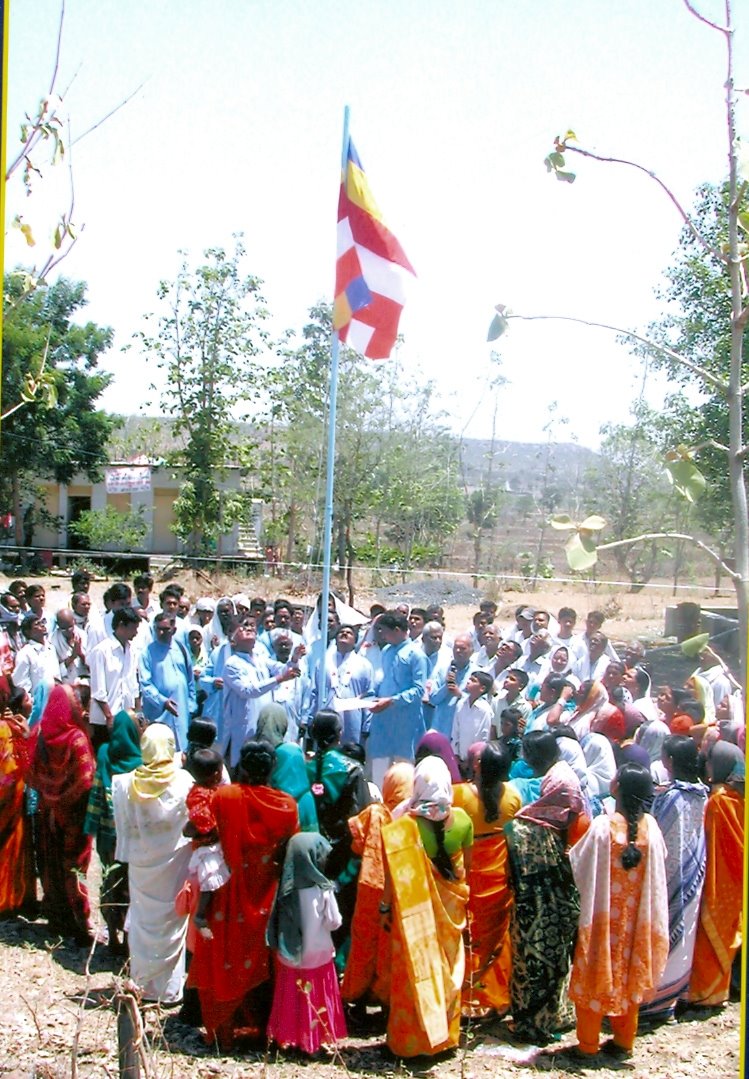
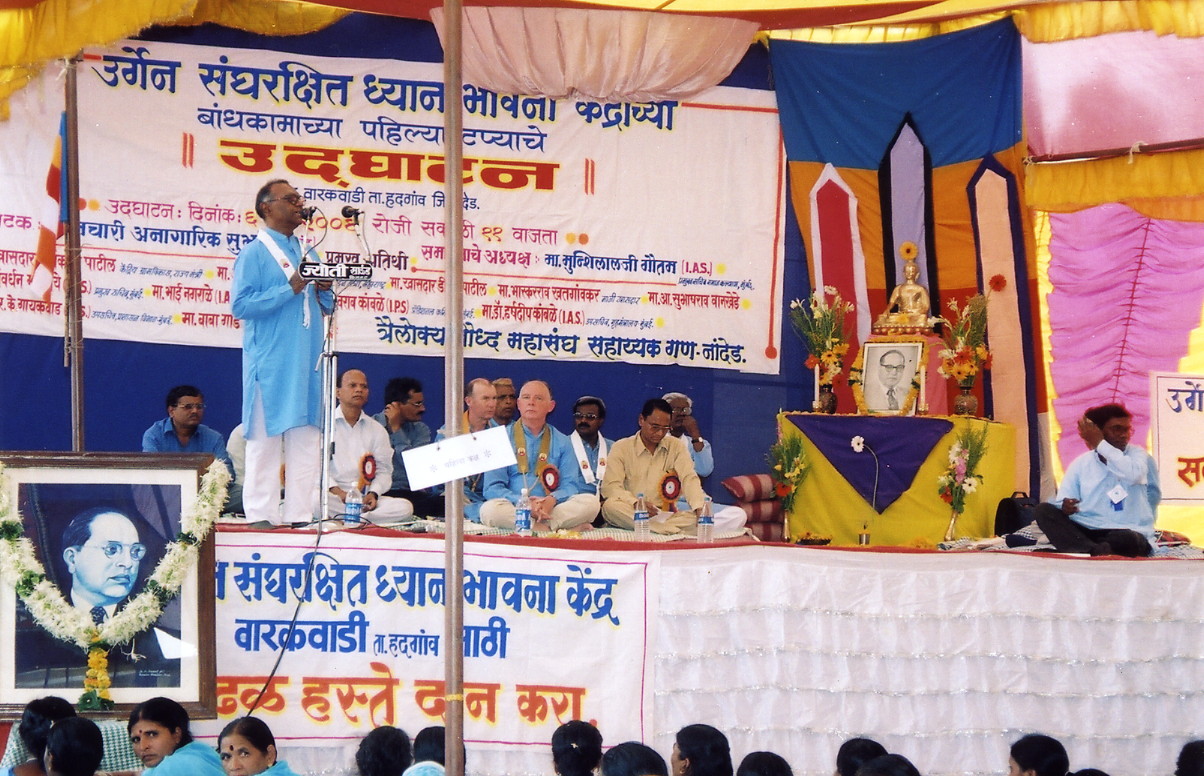
"On 19th May 2008 we held the first ‘Buddha Festival’ in India, at the Urgyen Sangharakshita Meditation Retreat Centre near Nanded. We started with chanting – the Tiratana Vandana, Shakyamuni mantra, Metta Bhavana and Sabbe Satta Sukhi Hontu Mantra. Then we started to make the shrine, which was set up under the shade of a ‘pandal’, in this way we accommodated the 500 to 600 people who came.
"At 10am there was a ‘Dhamma Dhwaja’ (Flag Hoisting) by me. There were 100 people at that time, after it people began to arrive in larger numbers. As part of our welcome programme we garlanded local social workers who had done excellent work in our community. One, whose age is 78 years and who had been a freedom fighter working for the social movement since 40's, narrated to us some of the history of his work of the last 50 years.
"There was a full length talk, given by Dh. Surangam on the topic of “Buddhism and Buddhist Culture”. He was describing the present situation of the so-called Buddhists and what they are supposed to do in future to practice Buddhism and create a Buddhist Culture. His talk was so impressive that many people put the figures in their mouths in astonishment and appreciated the suggestions given by him..
"In the afternoon was a very appealing and heart touching programme - the conversion programme of a family coming from the ‘Matang community’. This is one of the Scheduled Castes, their traditional occupation is that of ‘plastic bag scavenger’, and they are very poor. During the ceremony I stressed that no one can become a real Buddhist until and unless he/she takes Diksha (conversion). Although the ceremony was organised just for one family other people joined it spontaneously – afterwards the ‘Diksharthis’ (the new Buddhists) said they felt as if they got a new birth by embracing Buddhism.
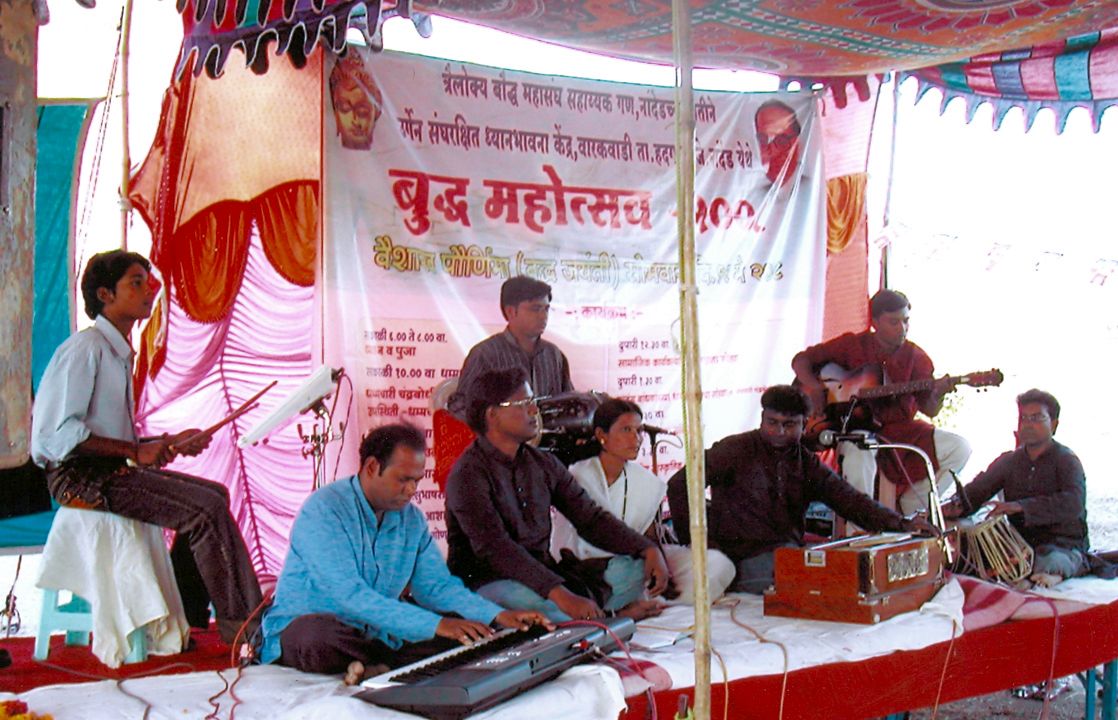
"Later there was a cultural programme presented by Amitayus and the Ashvaghosa Cultural team from Amaravati. We provided food to each and every one who were present. There were about 500 people who took the food.
"In the evening there was again a cultural programme, this time of local singers who sang songs spontaneously, some girls presented a dance programme on celebrating Dr. Babasaheb Ambedkar and the Buddha. Throughout the night a singing party from the nearby village (Patnur) continued, this went up to 6:00 in the morning of 20th May.
"This way the first Buddha Festival organised by TBMSG Nanded at the Urgyen Sangharakshita Meditation Centre became successful in all respects. Afterwards I heard the people were murmuring that this type of Buddha Festival should be arranged every year. I feel that this was the receipt given by the people for our excellent programme. I am sure that this festival will become a regular feature of our activities. Thank you to all who supported us.
The Buddhafield Festival has for some years been the FWBO’s largest event outside India. It’s been held every year since 1996 and has gone from strength to strength, quietly building a loyal following almost entirely by word of mouth. This year they plan to move to a new site – the third since the Festival began – and increase the size slightly, to 3,000.
By happy coincidence they’ve also hit the UK’s Sunday papers in a way they never have before, with top reviews in the Times’ list of ’12 best boutique festivals’; the Guardian’s ‘20 festivals you’ll never have heard of’; and the finally the Independent (not online so far as we know).
As the Times eloquently puts it, “'Are you sure?’ you cry. ‘A festival without alcohol, or drugs, or even – whisper it – dogs?’ But yes, as its name might suggest, Buddhafield isn’t your normal bunch of loons, sorted for Es and whizz and standing in a field with 20,000 others.”
Or, as the Guardian says, "This couldn't be more different from your run-of-the-mill festival."
Each year Buddhafield aims to learn that little bit better how to create a genuine festival that occupies a respected place in the calendar of UK alternative festivals and which genuinely follows the Buddhist precepts. This year, on their Festival Volunteers Page, they say -
“Buddhafield 2008 is organised by practising Buddhists, attempting to exemplify the qualities of infinite Wisdom, Compassion and Positive Energy and to create an environment where others can experience a taste of these qualities. To help us we take on 5 training principles and as contributors to Buddhafield 2008 we ask you to join us in trying to make these training principles a way of life on the site.
"The 5 principles are -
"To Try Not to Take Life or Cause Harm Cafes on the site are Vegetarian/Vegan. Buddhafield has a strong ecological thread. "To Try Not to take the Not Given We try to be aware of what we take from others in all its aspects, goods, time, energy... "To Try Not to Indulge in Sexual Misconduct We try not to use sexuality to exploit or coerce others. "To Try Not to Lie We try to be honest in our communication. "To Try Not to Take Intoxicants We have a policy of discouraging the consumption of intoxicants on the site. We need clear minds to put these principles into practice!
The Buddhafield Festival this year will be held near Taunton, from July 16-20th. Over 600 tickets are given away to the many crews and performers needed to run the Festival, if you’re interested in volunteering or contributing in any way please visit the Festival Volunteers Page of the Buddhafield website where you’ll find application forms and descriptions of what’s needed.
Chandrabodhi in India is about to hold the first ‘Buddha Festival’ in India. This has been a dream of his since his time in the UK when, while living at Vajraloka Meditation Retreat Centre, he attended an early Buddhafield Festival and conceived the idea of creating something similar back in India. His dream is now coming true, and the Festival itself is coming up soon. In fact it’s timed for Wesak, the full moon of May – which this year falls on May 19th.
In the run-up to the festival he’s been busy fundraising, and, with the help of Lokabandhu, the FWBO’s ‘Development Coordinator’, has run what’s probably the FWBO’s first internet fundraising campaign. In fact, in just over three days he reached his target of UK £700 – and he’s delighted!
This was achieved using ‘justgiving’, a UK-based internet fundraising website which allows fundraisers to create simple webpages advertising their project. Each page then provides a simple and secure facility for supporters world-wide to make donations on-line. Although Chandrabodhi’s reached his target for international contributions he’d very much welcome further donations; his page is www.justgiving.com/chandrabodhi.
Do have a look – and look out for more justgiving appeals in the future!
Chandrabodhi writes -
“I am Chandrabodhi, living in India. Many of you will know me; for many years I have been part of Trailokya Bauddha Mahasangha (as our Order is known in India). I am developing the Urgyen Sangharakshita Meditation Centre at Warakwadi, in the very beautiful countryside near Nanded in Maharastra.
“This year, we are holding a Buddha Festival at Warakwadi to attract the Buddhist and non Buddhist people. This way we want to establish the Buddhist culture, it is a very important part of our vision to attract people in India to the Dhamma. Actually, the inspiration for this came from the Buddhafield Festival in UK; we want to create a ‘Buddha Mela’ here in India.
“But this is the first year we have done this, and I am appealing for your support. Please sponsor me and help me reach my target of UK £700- this is what we need to guarantee the event is a success.
“The festival will be inaugurated by the Cultural Minister of Maharastra; there will be meditation Workshops led by me, and talks by many distinguished visitors – plus an all-night Cultural Programme. This festival will be on the lines of the Buddhafield Festival in the UK; I want that this Buddha Festival should become the regular feature of our Meditation Centre. This is our first year but already we are hoping for 1,000 people to attend”.
In June Sangharakshita will be speaking at a major UK conference entitled "The British Buddhist Landscape – Transplantation and Growth"; bookings have now opened and the organisers are advising “book early to avoid disappointment”.
Speakers so far include Sangharakshita, Stephen Batchelor, Dr John Peacock, Dr Helen Waterhouse, Ajahn Laow, Rev. Prof. Sato, Peggy Morgan, Colin Ash, Rev. Saido, Ven Sumana, Tony Kemmer, Phil Henry, Keith Munnings, Sharon Smith, Yann Lovelock, Munisha - plus others to be confirmed. It’s a chance to get a real overview of Buddhism in Britain from many different points of view.
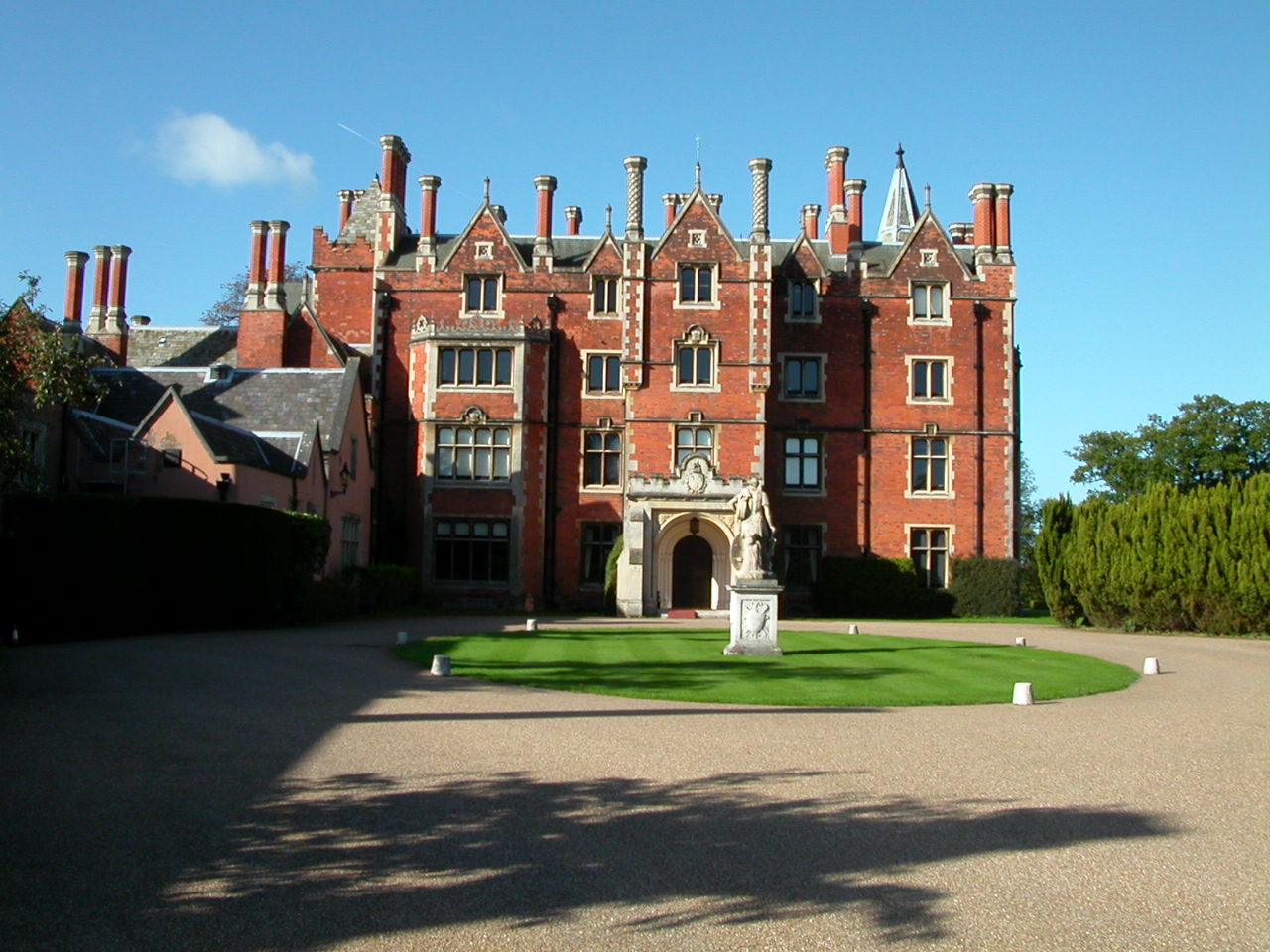
The conference is being organised by the Network of Buddhist Organisations (UK) & The Institute of Oriental Philosophy-UK, and will be held at Taplow Court, Taplow, Nr Maidenhead, Berkshire, SL6 0ER – the very splendid headquarters of Sokkai Gakkai UK. Taplow Court is a beautiful Victorian mansion in Taplow village, set in 85 acres of grounds and overlooking the River Thames, between Slough and Maidenhead
Accommodation is not provided, though there are many local Bed-and-Breakfasts– or some shared dormitories at Taplow – these are on a first-come-first-served basis so early booking is recommended.
The dates are – Fri 27th June 2008 5.30pm - 9.30pm
Sat 28th June 9.30am-6.00/9.30pm.
Sun 29th June 10.00am-2.00pm
The costs are full conference £65.00, concessions £45.00 + Saturday eve buffet £15.00, plus the cost of your chosen accommodation.
Today, February 15th, FWBO Centres across the world will be observing Parinirvana Day, the anniversary of the Buddha’s entry into final ‘Parinirvana’.
FWBO News is pleased to reproduce some excerpts from ‘Between Twin Sala Trees’, a talk given by Sangharakshita in 1983, in which he outlines the significance of the day and suggests some ways in which it might be observed.
Sangharakshita says –
“The first of my suggestions is that, if at all possible, we should observe the Parinirvana Day as a whole day’s celebration. We should read the Mahaparinibbana Sutta and chant the Vajrasattva mantra. The Mahaparinibbana Sutta is part of the Pali Canon, the sixteenth sutta of the Digha-Nikaya, and it gives an account of the last few months of the Buddha’s life, and especially it gives an account of the last day, or rather, the last night of the Buddha’s earthly existence.
“Perhaps it’s not necessary in the course of our celebration of Parinirvana Day to read through the whole of the Mahaparinibbana Sutta. We can perhaps make a selection and read only those parts, only those sections which have a direct bearing on the Parinirvana itself or on the events leading up to the Parinirvana itself.
“The Mahaparinibbana Sutta could be read aloud in the shrine room, perhaps people could take it in turns to read, perhaps Order Members could take it in turns to read. And of course one must remember to read slowly, by which I don’t mean very, very slowly - I simply mean don’t rush it. And mindfully, paying attention to what one is reading and to the meaning of what one is reading, and also loudly, and clearly, and distinctly, so that everybody can hear you.
“The second of my suggestions for observing Parinirvana Day is that in the evening, during the performance of the Sevenfold Puja, we should make our observance of the Parinirvana Day also an occasion for remembering other deceased persons - not just the Buddha’s Parinirvana all those centuries ago, but also other deceased persons, especially Order Members, Mitras and Friends, who’ve died in the course of the previous year or so. We can place, perhaps, their photographs on the shrine, below images or pictures of Buddhas, Bodhisattvas and gurus.
“And their full names, and the dates of their death should be read out either during or before the Sevenfold Puja. We can not only remember, not only commemorate Order Members, Mitras and Friends, in this way, but also the friends and relations of such if anybody wants to bring along the photograph or the name of anybody, near and dear to him or her, who has died, especially in the course of the last year. All should be remembered, on that occasion with metta”.
Sangharakshita goes on to highlight some of the more significant episodes in the Mahaparinibbana Sutta: the Episode of the Mirror of the Dhamma; the Episode, or Teaching, of Subjective and Objective Refuges; the Episode of the Untimely Flowers; and the Episode of the Last Disciple. There are also some very interesting reflections on the different characteristics and ‘moods’ of the Buddhist Holy Places: Bodh Gaya, Kusinagar, Lumbini, and Sarnath.
‘Between Twin Sala Trees’ is available on FreeBuddhistAudio as either audio or text.
FWBO News would be very pleased to hear from readers around the world how they chose to mark this anniversary, either individually or in company of others at Buddhist centres. Simply click the ‘Comment’ link below and send us your comments.
Rupadarshin of Buddhafield has contacted FWBO News to inform us -
“Buddhafield has a new way into cyberspace - there is now a Myspace contact point for 'fans' of Buddhafield and of our particular take on spreading the Dharma. The Myspace format allows for fast updates about us to be sent out to our friends, and it also gives a flavour of Buddhafield to the Myspace network, through photos and slideshows, mantras, comments, and more. Just go to http://www.myspace.com/buddhafieldfwbo and have a look...
The more friends Buddhafield has on Myspace, the better - for both Buddhafield and the FWBO generally, so please get into MySpace, become our 'friend', and boost our profile. As my skills in this strange world improve I hope to add further links and features as seems appropriate. Any advice is more than welcome.
For those who prefer Facebook for online networking, Buddhafield events will be announced here too as the dates come clear. In fact there is already a Facebook ‘Event’ for the Buddhafield Festival 2008.
This year at the Essen Buddhist Centre in Germany four teenagers celebrated their ritual of leaving childhood. About 80 people attended the ceremony, which was probably the first time ever such a rite of passage for teenagers was held at an fwbo centre.
Jnanacandra (photo left) initiated and led the event and told FWBO News: “I believe that as a spiritual community it is important that we support each other at important junctions in life. There are several main transitions in a life-span, some of the more obvious ones being birth, coming of age and death. Traditional societies knew of their importance and usually had established means of celebrating them in order to help those transitions to happen as smoothly and skilfully as possible. Modern societies have often lost the awareness of their importance.
“In our Sangha we do have quite a number of families whose children have often attended families retreats and know each other. I felt it was important that at the age of 13/14 we offered them a way of acknowledging that something important was changing in them and in their relation to their parents. Something dramatic happens around that time in a person’s life and I felt that in making it more explicit we could support those involved, i.e. the teenagers themselves and their parents, by stressing and ritually invoking the positive forces involved in the process of change.”
“Of the seven teenagers aged 13 or 14 who were invited to take part four girls decided to have the ceremony. For three months before it they met weekly with Jnanacandra and explored issues around growing up: reflecting on their values in life, looking back at their childhood, exploring their relationship with their parents, as well as some outings like taking part in a first-aid-course and spending a morning at court.
“For the ceremony itself the girls were free to invite whoever they wanted, so we had grand-parents, wider family, peer friends and some friends from the Sangha. “We made it clear from the start that the ceremony was not strictly ‘buddhist’ i.e. they weren’t commiting themselves to buddhism in any way, although the ceremony certainly reflected buddhist values.” The ritual consisted of three parts which could be described as ‘connectedness’, ‘letting go’, and ‘evoking strength’.
The first part of the ceremony, ‘connectedness’, was dedicated to looking back. After a brief reflection on their childhood the teenagers and their parents gave expression to their sense of connectedness, mutual respect and gratitude by bowing to each other and by exchanging a symbolic present representing what they particularly valued in each other. This emphasized the deep bond between them that formed the stable basis from which the young people could go out to find their own way in life.
The second part of the ceremony, ‘letting go’, focussed on the process of letting go of the child by her parents that necessarily happens around that age. It was symbolically enacted by one of the parents cutting off a curl of their daughter’s hair. This was later to be thrown in streaming water. As they later confirmed, this had quite a strong emotional impact on some of the parents.
The third and final part of the ceremony, ‘evoking strength’ evoked the strength that the girls will need in order to venture into the turbulent years ahead of them. Holding a “power object” that they had previously chosen and ‘charged’, each of them listened to a beautiful Rejoicing in Merit by their elder sister, parent or grandparent. In this they were reminded of the many beautiful qualities that they have and that will help them through the bardo of adolescence that will take them to adulthood.
The ceremony was framed with live music by schoolmates of one of the girls and ended with the chanting of the blessings. After the formal part, there was coffee and cake and after that the families went off to continue their celebration at home. Many people voiced their appreciation of the event and expressed the hope that it may become a part of our culture across the FWBO.
Today sees the start of the 12th Buddhafield Festival – the FWBO’s largest event outside India, and a much-loved part of many people’s lives. It was sold out over a month ago, with the 500 places for helpers (stewards, site crew, café, healers, and many more) full well before that.
The theme this year is “A LIVING MANDALA - the magic of community”, reflecting Buddhafield’s growing interests in both creating a large rural practice community and Deep Ecology.
Over the past years the Festival has become more and more of a meeting-place for Buddhists of many traditions, and this year it is hoped there will be people (and in many cases teachers) from the Amida Trust, the Network of Engaged Buddhists, the Network of Buddhist Organisations, Sokkai Gakkai, Gaia House, the Tigers Nest Dzogchen community, Vipassana, and others such as the ‘Meditation at Work’ project. This is in addition to many meditation and Dharma teachers from the Western Buddhist Order. In particular the FWBO's founder Sangharakshita is expected to attend for the first time and to give a talk, despite his advanced years.
Too much happens over the five days it’s on to ever list here, see some past Festival Eye reviews and check out the pictures from last year here or the dharma teaching to get some idea.
The Friends of the Western Buddhist Order (FWBO) was founded in 1967 by Sangharakshita. It is now an international movement with activities in more than 20 countries, including India, where it is known as the TBMSG, the 'Trailokya Bauddha Mahasangha Sahayaka Gana'. The FWBO/TBMSG is a non-sectarian Buddhist movement which seeks promote the practice of Buddhism in a form appropriate to the modern world.




 rss
rss