Thursday, February 28, 2008

Taking Buddhism to the Himalayas?

Munisha reports from Bhutan...

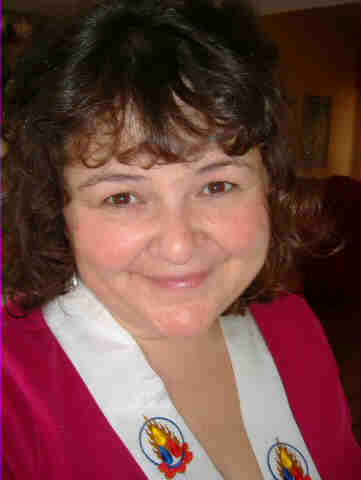
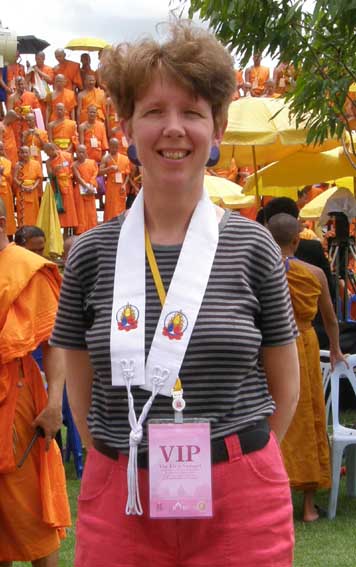
Last August I spent a very interesting three weeks in Bhutan. As the education officer at The Clear Vision Trust, I'd been asked by the Bhutanese Ministry of Education to come and put the finishing touches to their draft Framework for Values Education - which overlaps with the curriculum areas known in the UK as Religious Education, Social, Moral, Spiritual and Cultural Education, and Citizenship Education. I asked Joyce Miller to accompany me; she's a Theravadin laywoman and recently retired Bradford (UK) Local Education Authority officer for Diversity and Social Cohesion.

Bhutan straddles the eastern Himalaya. It's about the size of Switzerland, with a population of 600,000 mostly subsistence farmers, mostly Buddhists. Sandwiched between two superpowers, China and India, its survival as a sovereign nation relies on the maintenance of its distinctive culture, traditions and landscape, whilst meeting modern, global culture. Bhutanese are among the millions who have jumped straight from no phone to mobile phone; from almost no TV to cable. They're also moving from 100 years of absolute monarchy to a constitutional monarchy: March 2008 sees Bhutan's first elections.

Perhaps the most valuable thing Bhutan has given the world is the concept of Gross National Happiness (GNH): the notion that the true wealth of a nation is to be measured not by its industrial and commercial output but by the all-round wellbeing of its people. All public policy is formed with GNH in mind, and education is part of this.

Our visit began with a presentation demonstrating our understanding of Values Education, and something of Bhutan's present spiritual and political culture. With the vice chancellor of the new university as Chair the officials sat in rank order down a long table. All in national dress, as he entered they bowed in turn, stroking the backs of their fingers across the floor towards their feet. During the discussion following our presentation, we noticed they contributed also in rank order. They'd specifically requested a PowerPoint presentation, which unfortunately became a PowerCut presentation. I won't forget their insistence on hearing some of the new Clear Vision CD of meditations for young people: the entire room in silence, most of them probably meditating for the first time, led by the voice of a female western Buddhist - me!
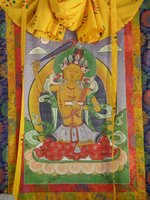
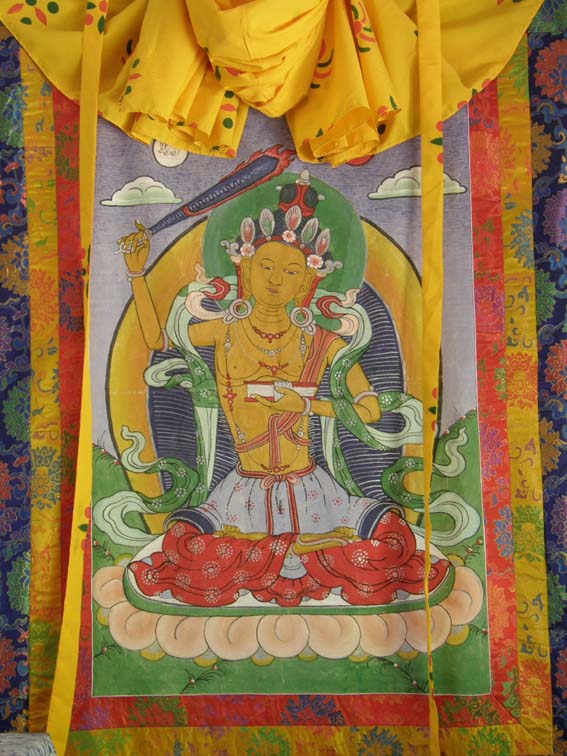
After that there were four fascinating days of visits to schools and teacher trainers, assessing the current teaching of Values. And further meetings, and work on the Framework - except that they kept taking us out sightseeing in office hours, so that eventually there were just four days for our work on knocking the Framework into shape, drawing up tables of exactly what values could be taught through what themes and activities, across all the years of school; all without explicitly mentioning Buddhism. The school system is secular (even if every day begins with lengthy whole-school prayers to Jampelyang, God of Wisdom - aka Manjushri - see photo) and up to 20% of Bhutanese are Hindu.

So, why did the government of a more than thousand year-old Buddhist culture consult a pair of British convert Buddhists? The Bhutanese educationalists we met love the Dharma and are exasperated at the lack of Dharma teaching for laypeople. Many of these educationalists are highly educated at western universities; one said he had learned all his Dharma from an Eastern Religions course at a Canadian university. Many are reading western Dharma books. We heard of school teachers sent abroad on Goenka retreats, much to the annoyance of Bhutanese monastics. “Well!”, commented the vice-chancellor - "What are THEY doing?"

I saw in senior educationalists a desire to introduce young people to what I'd call a “useable Buddhism”. Most Bhutanese lay Buddhists never learn to meditate or study even basic teachings, because Himalayan Buddhism is esoteric and traditionally the preserve of monastics, whom laypeople support out of a respect for tradition. But across Asia (and among British Asian Buddhists) many young people are no longer inspired by tradition. They want to be modern, western. If they become interested in Buddhism, it will be because someone teaches it from scratch, as we would do in the Religious Education classroom, with teaching materials such as Clear Vision's, and they find it makes sense.

Our hosts were keen to invite us back to train the country's headteachers in the new syllabus, which is planned to start in January 2009. However, the elections mean that the country's tiny civil service is entirely preoccupied with voter education. Add to this the coronation of the new king in May and I doubt we'll be hearing from them for some time!

Labels: , ,

Sunday, December 02, 2007

Bristol's Vitarka Project

For the past nine months the Bristol Buddhist centre have been running the ‘Vitarka Project’. Kamalamani reports –

In April this year we were successful in being awarded £4,400 from the UK government’s Faith Communities Capacity Building fund. This was to enable us to contribute to the development of a culture of tolerance and mutual respect through outreach work to schools and the wider community

I was appointed as Schools Outreach Development Worker for the Buddhist Centre later in the month and have since been thoroughly enjoying co-ordinating schools work. My main priority has been to make contact with schools, so that they know what’s available to them in terms of visiting the Centre and having visitors to their schools. To give you an idea of what the schools work covers, please read on!

One of my first assignments was hosting a visit from Chew Valley School. This was particularly significant for me, as Chew Valley is the secondary school I attended! We’ve developed a ‘School Visiting Kula’, my hope is that this will build sangha friendships, as well as provide a great capacity for schools – it’s a multi faceted and talented team.

I’ve spent time reviewing existing resources and adding some new resources from Clear Vision (for example, their DVDs entitled'Pilgrimage: An Indian Spiritual Journey' and 'Buddhist Centre in the City: A Tour of the Manchester Buddhist Centre' - both great, interesting film making). I hope to continue this process to build the resources of the kula and to be able to signpost teachers to relevant and interesting resources.

In terms of local networking, I’ve found it very interesting to meet with Bristol City Council’s Social Inclusion Officer, the Interfaith Consultant, local SACRE representatives and members of the Bristol Diocese, to find out what’s already going on in and around Bristol. Bristol schools face significant challenges, with one of the highest rates of exclusion of pupils from schools in the country, and ongoing tensions between some ethnic groups. It seems that the need for interfaith and social inclusion work is greater than ever, to support schools and the wider community.

Earlier in the summer I was a facilitator at the Childrens’ Interfaith conference, run by Bristol City Council. This was a really interesting day and I was particularly struck by hearing children talk so openly about the similarities and differences between their faiths. It was very moving and heartening. I hope this event will become a regular fixture in Bristol’s calendar.

The Future
There is a huge amount of scope for the Buddhist Centre to continue to develop its schools and educational work, and I imagine that this area will blossom and grow over the next few years. It would be great to have ongoing partnerships with a high percentage of schools across the city. Potentially, this work also goes beyond schools work, into broader interfaith work, community cohesion and meditation in schools, to mention but a few.

So I thought I would finish with a few of the questions and comments from some of the children I’ve met and enjoyed working with so far, given that they are by far and away the most important focus of this project…

“When you’ve been enlightened, can you become unenlightened?”
“Are the three jewels to do with each of the elements?”
“Will the Buddhist lady be black?” (question to a teacher before my visit, from a Muslim girl)
“Do you still cry when you’re a Buddhist?”
“Does Buddhism stop crime?”
“Will you be reborn as a Buddhist if you’ve been a Buddhist this lifetime?”
“We’re like flowers miss aren’t we? Cos we die too…”


Click here for our Autumn schools programme.

Labels: , , ,

Tuesday, November 13, 2007

VideoSangha and ClearVision – two brilliant resources

Videosangha is the FWBO’s video website. Here you can find short movies on a very wide range of FWBO-related topics. The site has expanded dramatically in recent weeks and now boasts sections on FWBO History, Questions, Centres, Retreats, Meditation, Dharma, Social Work, Activism, and the Arts – to name but some. It's easy to contribute to - the creators say "Feel free to submit any video related to your involvement with Buddhism and the FWBO - however tenuous! Just upload your video to YouTube (for example), give it a tag of FWBO and we will import it automatically". You can also register on the Videosangha website and then review videos submitted by others - most recently, Ramesh teaching Bollywood dance at the Buddhafield Festival, Jayamati directing Sangharakshita's 'Going Forth' on the recent Order Convention, and a series of videos from our FWBO centres in Finland - rarely seen on these pages - such as the fast-moving, beautiful, and curious Kamnitsanmatka minuutissa .


ClearVision provides educational audio-visual resources for students and teachers to explore Buddhism. This site too has become a rich treasure trove of material – besides selling DVDs for teachers the ‘Students’ section contains a mass of free material for children of all ages – all carefully graded to match children’s needs and interests plus the UK RE syllabi. There are four sections, one each for children aged 5-11 (with some wonderful stores from the Jataka tales), 11-14 (with an interactive Wheel of Life), 15-16 (with sections on religious authority, and citizenship, and finally 17-18 A-level students (where there's sections on human rights and responsibilities, also sex and relationships).

For teachers, and adults generally, there is their new audio CD of non-religious ‘stilling exercises’ and a fascinating collection of on-line art by Western Buddhists.

Labels: , ,

Wednesday, November 07, 2007

Ask a Buddhist...

Clearvision launches their new ‘Ask a Buddhist’ service for students.

Clearvision, an FWBO educational charity that provides audio-visual teaching material on Buddhism to schools, has launched its new on-line video service called ‘Ask a Buddhist’. Buddhist teachers from the FWBO (and, they plan, from other Sanghas too) give personal answers to all sorts of difficult questions posed by the many students who've visited Clearvision and the Manchester Buddhist Centre over the years. Several questions have multiple replies, indicating that Buddhists sometimes have different points of view and there is no one ‘right answer’ in the Buddhist tradition.

So far they’ve uploaded some 24 video clips in seven categories, covering such questions as -
What's the hardest thing about being a Buddhist?”;
"Is it OK for Buddhists to have same-sex relationships?";
"What's your view on abortion?"
and even
"Why does the Buddha have long ears?"!

They are inviting students to pose more questions and teachers from other Buddhist groups to submit answers. Click here to contact them.

This looks like a great resourse and an excellent use of the internet. Thank you Clearvision.

Labels: , ,

Friday, April 20, 2007

Dhamma Night College, Mumbai

The Dhamma Night College in Mumbai is celebrating one year of actitivites - a report by Dhamamcari Amritdeep.

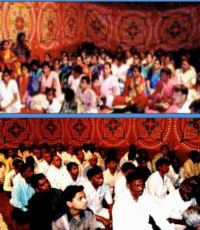
Dhammachari Anomdassi with the help of Amritdeep & Adityabodhi started a Dhamma Night College in Dombivali Mumbai to benefit the working people who can’t attend classes due to their jobs. For nearly a year now they have been running classes for three different categories. There is a class for people who have asked for ordination), one for the Mitras, and a class for general people. So far many people have prarticipated in these classes. People from other backgrounds also attend the classes.

The class’s main aim is to provide Dhamma teaching to those who don't have good and easy access to Dhamma due to the life in Mumbai so busy, rushing and tense. People have really appreciated the effort Anomdassi Adityabodhi & amritdeep are putting in. Each class has about 30 to 40 people attending each week. A proper syllabus is planned to teach this people.

Anomadassi, Aditybodhi, and Amritdeep are very keen to carry on the activities of the night college in future although there are some difficulties of funds. Karuna initially supported it for six months, but classes are still going on. These Order members are committed to take this work forward. This is really very good initiative taken by this three people, and it is so far very successful.

Labels: , ,